TitleSearch.com Records
Farm & Ranch Land Searches
On this page
Agricultural Land Is Layered
A suburban lot is usually one estate with one owner and a short history. Farm and ranch land is frequently several estates stacked on the same ground, assembled from tracts acquired over generations, and carrying rights that were separated from the surface long before the current family arrived.
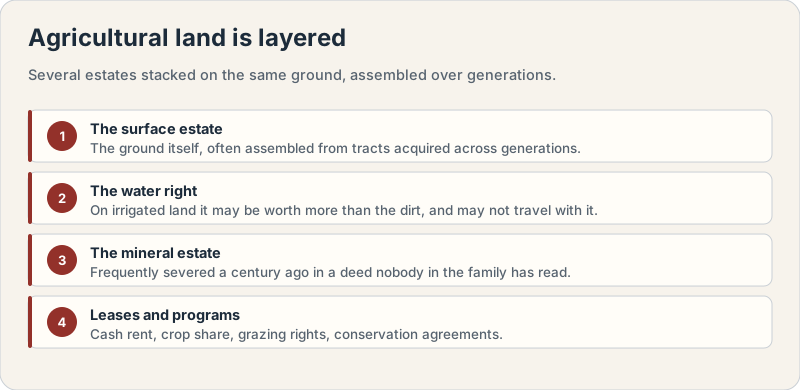
The search is therefore broader rather than merely longer, and the items that matter most are ones a residential search would never think to look for.
Water Is Often the Most Valuable Thing
On irrigated ground the water right can be worth more than the dirt, and it does not always travel with the land. In much of the western United States water is allocated under prior appropriation, where a right has a priority date and can be sold separately from the parcel. A deed conveying the land may say nothing about whether the water comes with it.
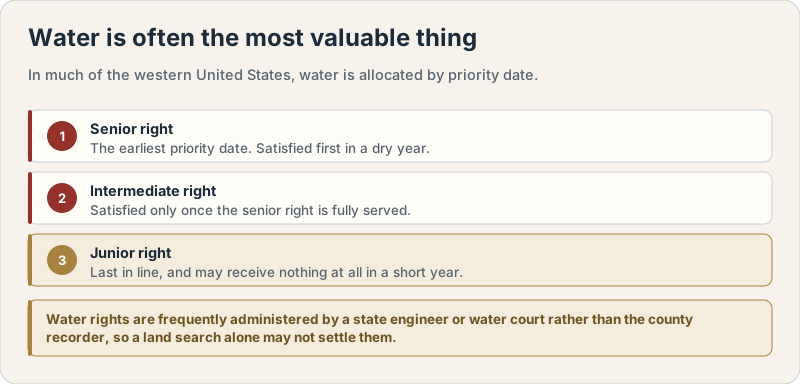
Check whether the right is appurtenant to the land or held separately, what its priority date is, and whether any part of it has been sold, leased, or transferred to another use. Much of this sits with a state engineer or water resources department rather than with the county recorder, so a land records search alone will not settle it. Irrigation district assessments are a further item, billed separately and capable of becoming a lien.
Minerals Below, and Who May Come for Them
Severed mineral rights are common on agricultural land, often separated a century ago in a deed nobody in the family has read. The consequence is not academic. In most states the mineral estate is dominant, meaning the mineral owner has a right of reasonable surface access to reach what they own, and a buyer who assumed the surface came with everything under it can find equipment arriving.
A mineral rights search traces those interests through the chain. On a large ranch assembled from several tracts, the mineral position can differ from one part of the property to another.
Leases, Grazing Rights and Government Programs
Agricultural land carries arrangements that are sometimes recorded and frequently not.
- Cash rent and crop share leases, which may be recorded and may simply be an annual handshake. A tenant in possession generally has rights regardless.
- Grazing leases, including federal and state grazing permits, which are administered by the agency rather than the county and do not transfer automatically.
- Conservation easements, which are recorded, permanent, and restrict development in exchange for a payment the current owner already received.
- Program enrollments such as conservation reserve contracts, which carry obligations and sometimes repayment provisions on transfer.
- Wind and solar leases and options, increasingly common and frequently recorded as a memorandum that reveals little about the terms.
Access, Fences and Descriptions
Rural access is a recurring problem. A track crossing a neighbor's ground for forty years is not the same as a recorded easement, and the difference surfaces when the neighbor sells. Our guide to vacant land title searches covers the access question in more detail.
Descriptions drift too. Land assembled over generations is described by metes and bounds, by government survey, or by exception from a larger tract, and the boundaries on the ground may not match the words. That is survey work rather than title work, and a surveyor settles it.
What to Order
For most farm and ranch purchases the useful scope is a chain of title search deep enough to catch old severances and reservations, a lien and assessment search, and a mineral search where the region warrants it. Compare the options on the title search products page, or request a custom quote for acreage spanning several tracts or counties.
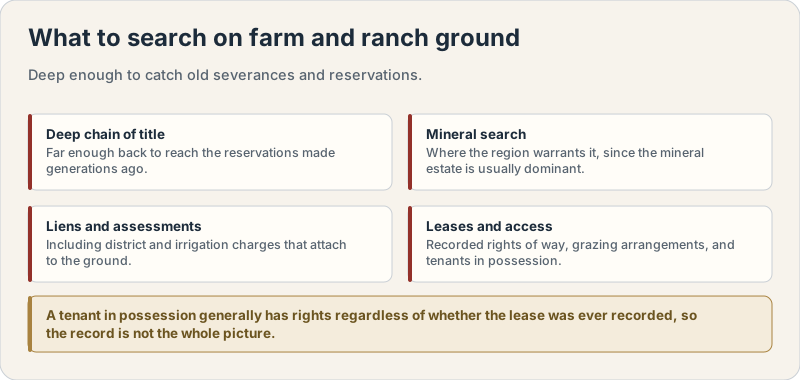
Two honest limits. A title search reports what has been recorded and indexed in the offices searched as of its date, and recording practice varies by county. And water rights, grazing permits and program enrollments are largely held by state and federal agencies, so a clean county report says nothing about them.
Contact us with the legal descriptions and the counties and we will tell you what scope the property calls for.
Order a certified title search today.
Certified abstractors, county-verified records, and clear turnaround times — nationwide.