TitleSearch.com Records
Inherited Property
The County Does Not Know Someone Died
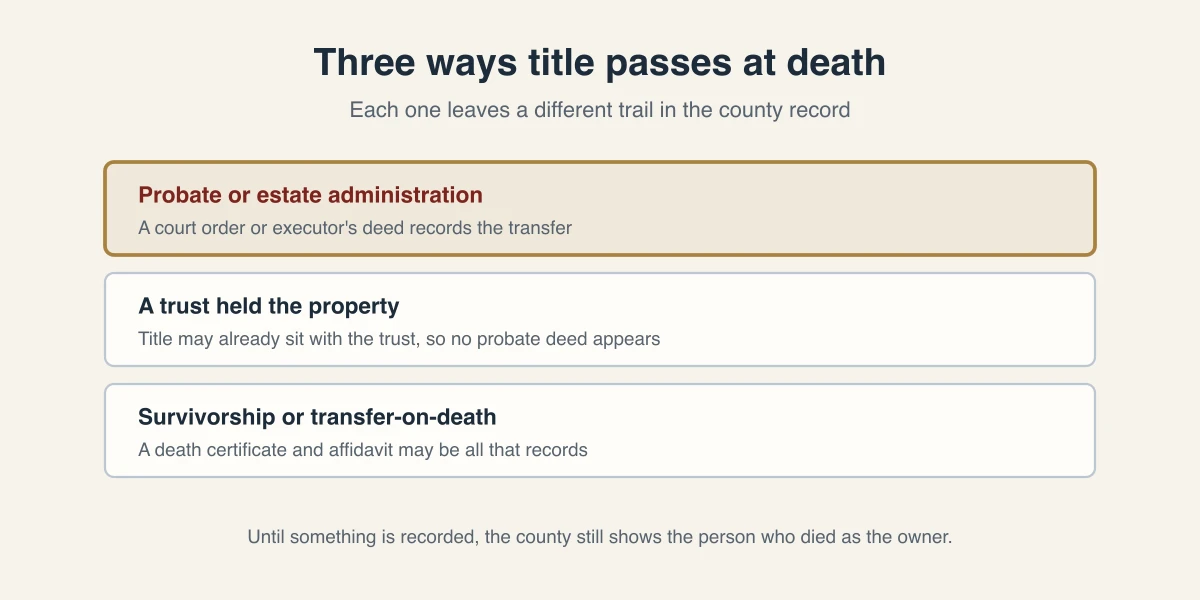 Inheriting property is not the same thing as owning it on the record. Until something is recorded at the county, the land records still show the person who died as the owner, and that gap is where most estate property problems begin. Heirs discover it at the worst moment: a buyer is ready, a closing is scheduled, and the title work comes back showing an owner who has been gone for six years.
How title actually moves depends on how the property was held. Probate or estate administration produces a court order or an executor's or personal representative's deed. If a trust held the property, title may already sit with the trust and no probate deed will ever appear. With survivorship or a transfer-on-death arrangement, a death certificate and an affidavit may be all that records. Each route leaves a different trail, and reading that trail is the first job of the search.
What the Search Tells an Heir or Executor
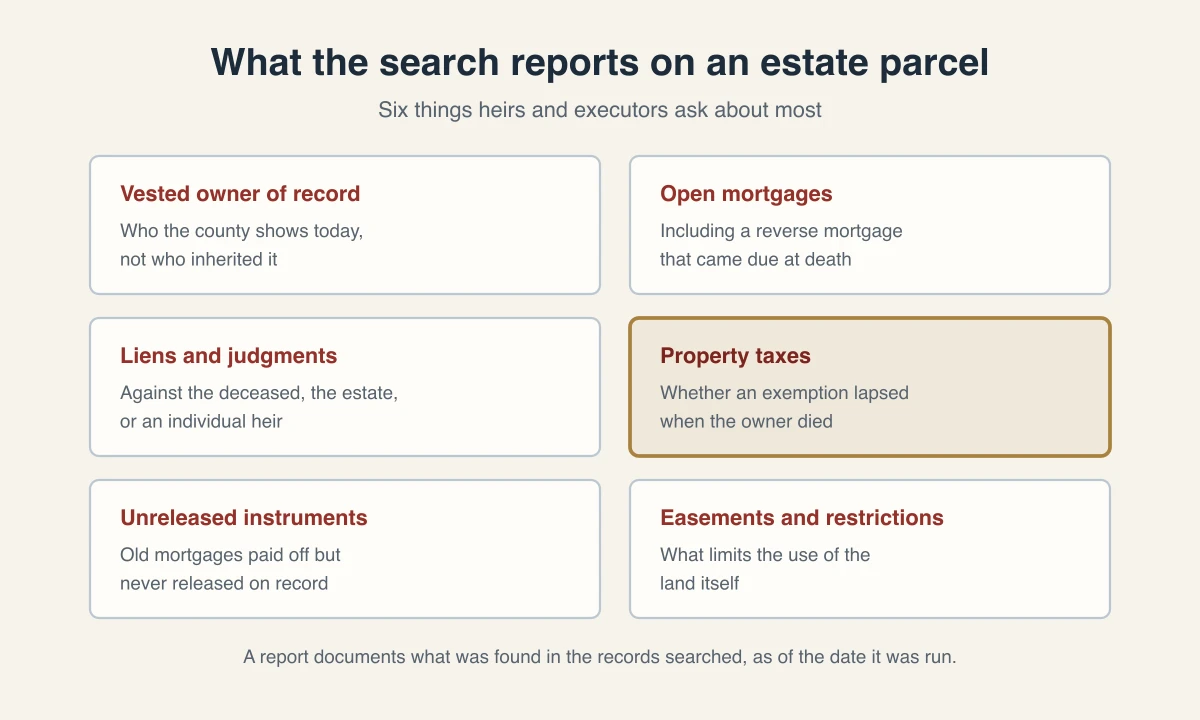 A title search on estate property answers the questions families actually argue about, using the record instead of memory.
Who the county shows as owner today
Not who inherited it, and not who has been paying the taxes. The vested owner of record is the starting point for everything else, and it is the single fact most often assumed rather than verified.
What debt survived the death
Mortgages do not disappear when a borrower dies. A reverse mortgage deserves particular attention, because these typically become due when the last borrower dies or permanently leaves the home, and the balance can be far larger than the family expects. Liens and judgments may attach to the deceased, to the estate, or to an individual heir's interest.
Whether the taxes are still right
Homestead, senior, veteran, and disability exemptions are tied to the person who qualified for them. When that person dies, an exemption can lapse and the tax bill can climb without anyone noticing until a delinquency has accumulated. Taxes follow the parcel, so they follow the heirs.
What was never cleaned up
Long-held family property collects paperwork problems: a mortgage paid off in 1994 that was never released, a satisfied judgment with no release on file, a boundary agreement referenced but never recorded. None of these are money problems. All of them take time to clear, which is why finding them early matters.
Every Heir Is an Interest of Record
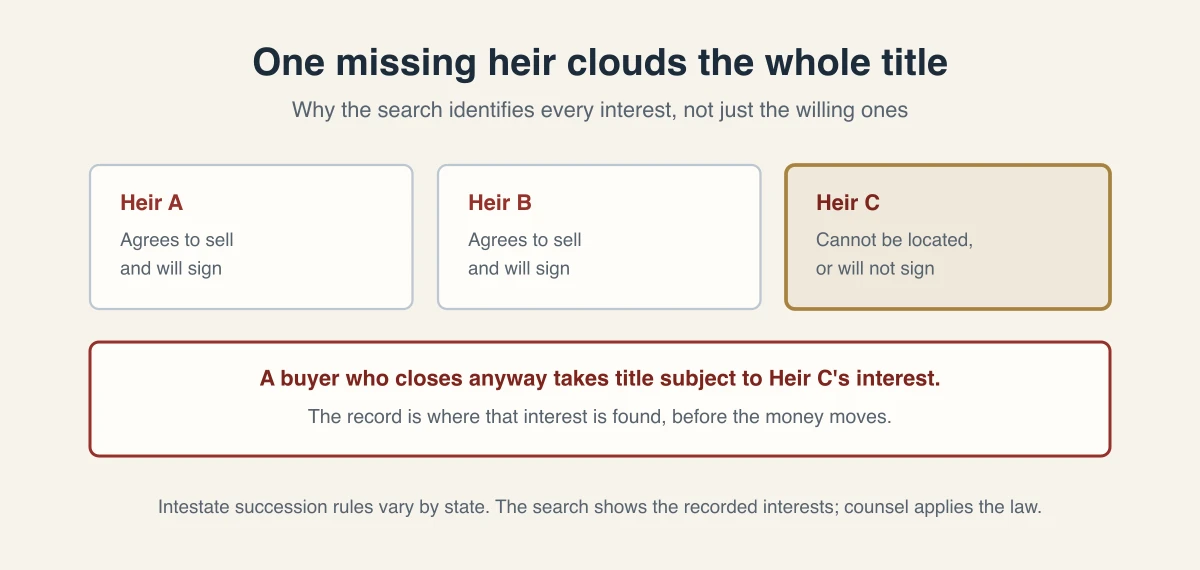 When several people inherit together, each one may hold an interest that has to be dealt with before the property can be conveyed with clear title. One sibling who cannot be found, or who simply will not sign, is enough to stall a sale entirely. A buyer who closes anyway may take title subject to that outstanding interest.
Intestate succession rules vary by state, and how an interest is created and extinguished is a legal question for an attorney. What the search does is show the recorded interests, so the family and its counsel are working from the actual record rather than an assumption about who is involved.
Which Report to Order
For most estate questions the useful scope reaches back further than the present owner. A current owner search confirms today's vesting and open liens. A chain of title search follows the conveyances back through the family's ownership, which is what you want when the property has passed hands informally or been split among relatives over the years. Where a specific instrument is missing, deed and document retrieval pulls the recorded document itself rather than an index entry.
One limit worth stating plainly: a title search documents what has been recorded and indexed in the offices searched, as of the date it was run. It is not an inventory of every possible claim against a property, and a clean report is not a promise that nothing exists. Unrecorded agreements among family members will not appear in it.
Not sure which one fits? See how far back a title search goes, compare options on the title search products page, or contact us with the address and we will tell you what the property needs. If the estate includes raw acreage, our guide to vacant land title searches covers the extra questions land raises.
Order a certified title search today.
Certified abstractors, county-verified records, and clear turnaround times — nationwide.