TitleSearch.com Records
Judgment & Lien Searches
Two different searches that people ask for interchangeably.
On this page
Property Liens and Name Liens Are Not the Same Search
People ask for a lien search meaning one of two things, and the difference decides how the work is scoped.
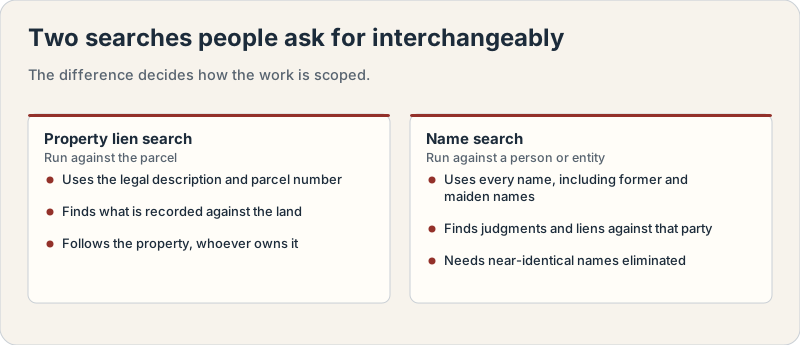
A property lien search asks what is recorded against a parcel. It is run against the legal description and the parcel number, and it returns whatever attaches to that land regardless of who owns it.
A name search asks what is recorded against a person or an entity. It runs through the grantor and grantee indexes and the judgment dockets, and it can surface claims that reach any property that person owns, including property nobody mentioned.
Most real questions need both. A buyer wants the parcel searched and the seller's name run. A creditor wants the debtor's name run across every county where they have lived or done business.
What Gets Found in the Land Records
- Mortgages and deeds of trust, and whether each has been satisfied, released, or reconveyed.
- Judgment liens, where an abstract of judgment has been recorded against the property.
- Federal and state tax liens, which are recorded and which carry their own priority rules.
- Mechanic's and materialman's liens filed by contractors and suppliers.
- Association assessment liens filed by a homeowners or property owners association.
- Municipal and code enforcement liens, in the jurisdictions where those attach to the parcel.
- Lis pendens, which is notice that litigation affecting the property is pending.
- UCC fixture filings, which are the one financing statement type recorded against land rather than filed with a state. Our guide to solar leases and UCC fixture filings covers those in detail.
What Sits Somewhere Other Than the Recorder
This is the part that catches people, and it is why a thorough answer sometimes needs more than one office.
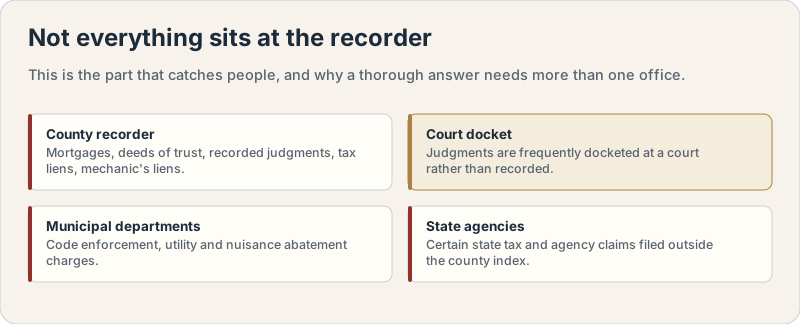
Judgments are frequently docketed at a court rather than recorded at the recorder, and whether docketing alone creates a lien on real property varies by state. Property taxes are administered by a treasurer or tax collector, which is a separate office from the one holding the deeds. Code violations, permit problems, and in some places unpaid utility balances are municipal records. Child support arrears, probate claims, and bankruptcy filings all live in their own systems.
None of that means the land records are inadequate. It means the question determines how many places have to be searched, which is a scoping conversation rather than a fixed product.
Priority Is a Separate Question From Existence
Finding a lien tells you it exists. It does not tell you where it stands relative to anything else.
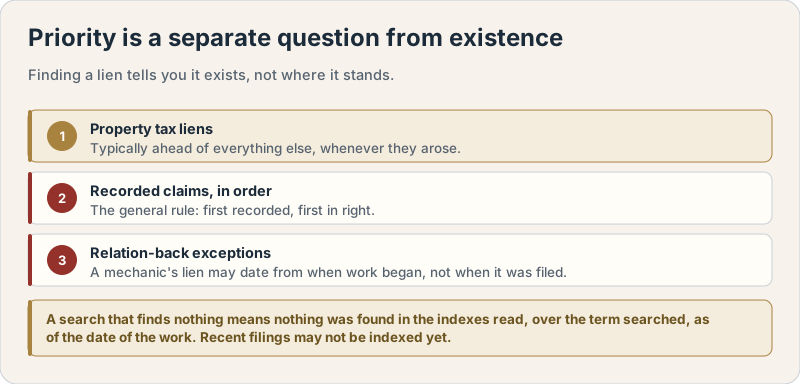
The general rule is that recording order governs, and there are substantial exceptions. Property tax liens typically sit ahead of everything regardless of when they arose. Some states give a portion of an association assessment priority over an earlier recorded mortgage. Mechanic's liens can relate back to the date work began rather than the date of filing, which means the recording date understates their position. Federal tax liens have their own notice and priority framework.
An abstractor reports the instruments, the dates, and the amounts as recorded. Which one outranks which on a particular property is a legal conclusion, and it belongs to an attorney licensed in that state.
Reading a Clean Result
A search that finds nothing is telling you that nothing was found in the indexes read, over the term searched, as of the date the work was done. That is genuinely useful and it is narrower than it sounds.
Recent work that has not yet been liened leaves no trace, and in many states a contractor has months to file. An unrecorded claim binds the parties to it and sits outside the index entirely. Name variations matter enormously, since a judgment indexed under a middle initial you did not supply is invisible. And indexing practice varies from county to county, so coverage is a local fact rather than a general one.
So treat a clean report as strong evidence rather than as proof, and give the searcher every name spelling you have.
Who Orders One
Buyers and auction bidders, before committing to a property whose encumbrances they will inherit. Sellers, who would rather find a problem while there is time to clear it. Lenders confirming position. Creditors trying to establish what a debtor actually owns. Attorneys assembling a file. Investors reviewing a property before it goes to a foreclosure auction, where surviving liens are the whole risk.
Ordering
Send the property address and county, the parcel number if you have it, the legal description from the last recorded deed, and every name to be run, including former names, maiden names, and any entity involved. Say what you are trying to establish, because that decides whether a court or municipal search should be added to the parcel work.
See the full range on the Title Search Products page, or the 50 point search for the most thorough option. When the scope is clear, order a search. If it is not, contact us and we will tell you what a search of that scope would and would not cover before anything is ordered.
Order a certified title search today.
Certified abstractors, county-verified records, and clear turnaround times — nationwide.