TitleSearch.com Records
Refinance Title Searches
One question matters most, and it is about position.
On this page
What a Refinance Search Is Really Asking
A purchase search asks who owns the property and what is against it. A refinance search asks something narrower and more pointed. Your new lender is paying off the old loan and taking its place, and it needs to know that when the dust settles nothing sits ahead of it.
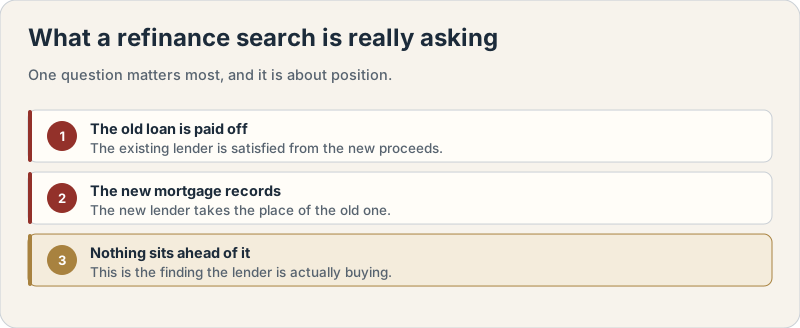
That single question, lien position, drives most of what the search looks for. Everything else is either supporting evidence or a problem to be cleared before closing.
What the Search Covers
An abstractor reads the county land records for the parcel and runs the owner names through the indexes, returning the ownership position, the recorded mortgages and whether any have been satisfied, judgment and tax liens, mechanic's liens, easements and recorded restrictions, and the property tax status.
On most refinances a current owner search is the right scope, because the question is about the present owner and what has attached during their ownership. Where the chain has a known problem, or where the property was inherited or bought at a tax or foreclosure sale, a longer term is worth the money. Our comparison of the basic and expanded searches sets out what each one includes.
The Findings That Actually Delay Closings
Five come up repeatedly, and every one of them is cheaper to find now than three days before signing.
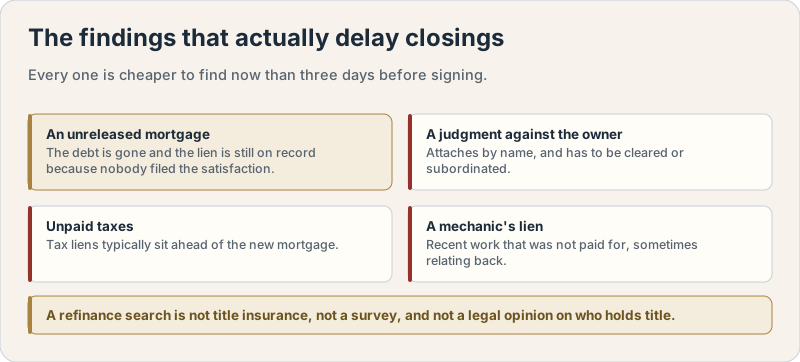
- A paid-off mortgage never released. The debt is gone and the lien is still on the record because nobody filed the satisfaction. Getting a release from a lender that has since merged or closed can take weeks.
- A second mortgage or HELOC nobody mentioned. An open line of credit does not disappear because the balance is zero. It has to be paid off and closed, or formally subordinated, and subordination is the lender's decision rather than yours.
- A judgment against someone with a similar name. Common names produce false matches constantly, and clearing one means proving a negative with identifying information.
- A contractor's lien from work you thought was settled. Recent renovation is the usual source.
- A vesting problem. A name that changed, a spouse added or removed, a transfer into a trust, or a deed that was signed but never recorded. Any of these can mean the person signing does not match the person on the record.
Order It Early, Not Late
The instinct is to treat title as a closing step. On a refinance that is backwards, because the findings above all need time to fix and none of them can be fixed at the closing table.
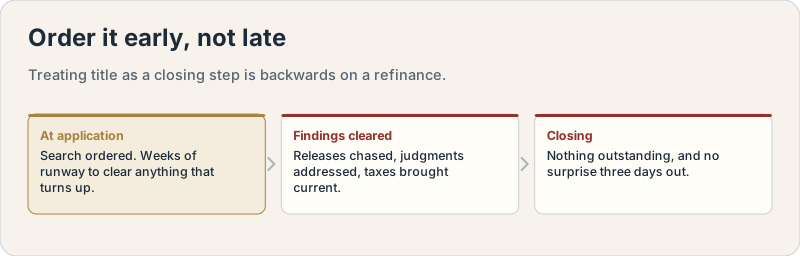
Ordering the search when the application goes in gives you weeks rather than days. If a release has to be chased from a defunct originator, or a judgment has to be cleared with identifying information, that is when it should start. A refinance that misses its rate lock because of a 2004 mortgage that was never released is an expensive way to learn this.
Cash-Out Changes the Emphasis
Where you are taking cash out, the lender is advancing more than the existing balance and its exposure grows accordingly. Expect closer attention to the tax position, to any association assessments, and to anything junior that might otherwise have been tolerated. Some lenders also require a broader search scope on a cash-out than on a straight rate and term refinance, so confirm the requirement before ordering rather than after.
What the Search Does Not Do
It is not title insurance, and it does not promise to pay if something is missed. It is not a survey and cannot tell you where a boundary runs or whether a structure encroaches. It is not a legal opinion on who holds title, which is a conclusion for an attorney licensed in that state.
And an empty result means nothing was found in the indexes read over the term searched, as of the date the work was done. Recording and indexing practice varies by county, so what an index can contain is a local fact. A report that names its scope is worth more than one that only states a conclusion.
Getting It Done
Send the property address, the county, the parcel number if you have it, and every name on the deed, including former and maiden names. Say whether it is a rate and term refinance or a cash-out, and pass along any scope requirement your lender has specified.
See the full range on the Title Search Products page, look at output on our report samples page, or order a search when the scope is clear. If you are not sure what your lender wants, contact us with the address and the requirement and we will tell you what a search of that scope would and would not cover.
Order a certified title search today.
Certified abstractors, county-verified records, and clear turnaround times — nationwide.