TitleSearch.com Records
Short Sales & Deeds in Lieu
On this page
Two Exits, One Obstacle
A short sale is a sale for less than the mortgage balance, with the lender agreeing to release its lien and absorb the shortfall. A deed in lieu of foreclosure hands the property to the lender directly and skips the sale. They are different transactions with different consequences, and they fail for the same reason.
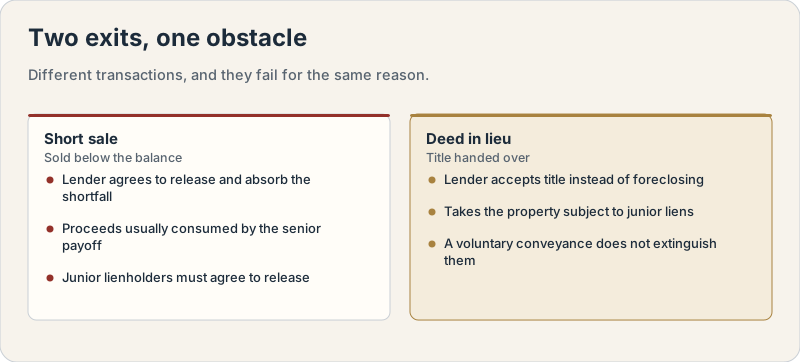
Neither one can close while a junior claim is still attached. The first mortgage holder sets the terms, but it is not the only party whose signature is required, and the parties nobody has identified yet are the ones that stall the deal.
What Has to Be Found
The search is looking for every recorded claim against the property and against the owner, because both kinds attach.
Against the property
Second mortgages and home equity lines. Property tax and special assessment liens, which are generally paid ahead of everyone. HOA assessments and any recorded fines. Mechanic's liens from work the owner commissioned, which on a distressed property is common because money ran out mid-project. Municipal and code enforcement liens where the property has been neglected.
Against the owner
Judgment liens, state tax liens, federal tax liens, and child support liens are indexed under the owner's name rather than under the parcel. A search of the address alone will not find them, and on a distressed owner they are likely to exist. Running the name is not optional here.
There is also the item nobody expects, an old mortgage that was paid off years ago and never released of record. It has no money behind it and it still has to be cleared before title can transfer.
Why the Small Lien Has the Leverage
In a short sale, the senior payoff usually consumes the proceeds, so a junior lienholder is being offered very little to release. It can refuse, and let a foreclosure proceed instead. The size of the claim has nothing to do with its power, and a modest judgment can stop a substantial sale.
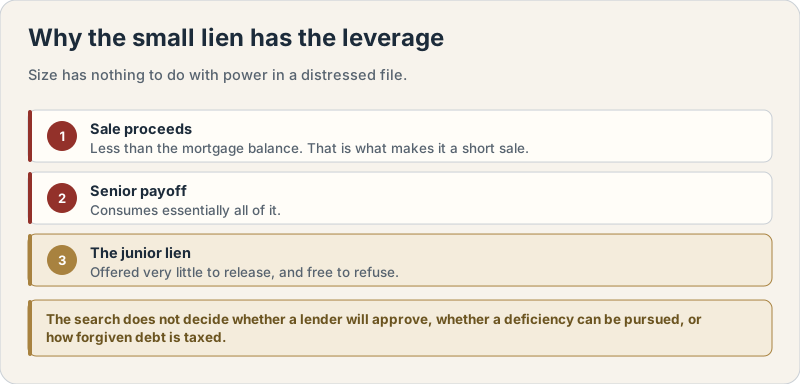
What that holder is weighing is whether a foreclosure would pay it anything, and whether the underlying debt survives the transaction as a personal obligation it can still pursue. Those calculations are why finding junior claims early matters so much. Found at the start, there is room to negotiate a release payment. Found at the closing table, the transaction restarts from the beginning.
A Deed in Lieu Has a Sharper Version of the Problem
In a deed in lieu, the lender is accepting title rather than foreclosing. That means it takes the property subject to whatever junior liens remain, because a voluntary conveyance does not extinguish them the way a foreclosure sale generally does.
The practical consequence is that a lender will usually not accept a deed in lieu on a property carrying junior claims. A clean search is effectively a precondition, and where the search finds anything, the parties are back to negotiating releases or back to foreclosure. Our guide to foreclosure auctions covers what survives a sale and what does not.
Search Twice
Both transactions take months. A search run at the start establishes the picture, and a second search immediately before closing catches what arrived in the meantime, which on a distressed property is a real risk. Judgments get docketed, taxes go further into arrears, and contractors file.
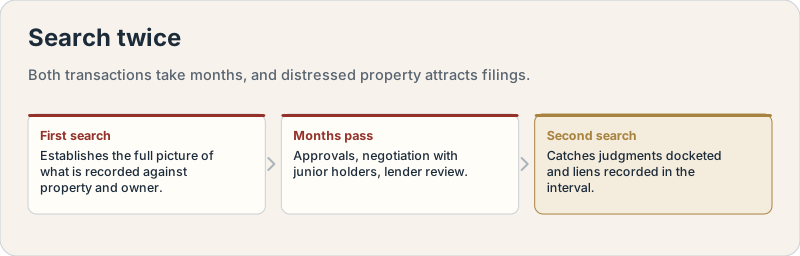
The update is narrow, quick, and far cheaper than discovering a new lien after the release agreements have been signed.
What the Search Does Not Decide
It does not tell you whether a lender will approve the transaction, whether a deficiency can be pursued afterwards, or how forgiven debt is treated for tax purposes. Those are questions for the lender, for an attorney, and for a tax professional respectively.
And a clean report means nothing was found in the indexes searched, as of the date of the search, in the offices searched. Recording practice varies from one county to the next.
What to Order
For either route, the useful scope is a search of the parcel plus a name search against every owner of record, deep enough to catch an unreleased older mortgage. Compare the options on the title search products page, see how a chain of title search differs from a look at the current deed, or request a custom quote for several properties.
Contact us with the address and the owner names and we will tell you what scope the situation calls for.
Order a certified title search today.
Certified abstractors, county-verified records, and clear turnaround times — nationwide.