TitleSearch.com Records
Owner Financing & Land Contracts
On this page
The Deed Does Not Move at Closing
Owner financing covers several arrangements, and they are not equivalent. In a seller-carried mortgage the buyer takes the deed at closing and gives the seller a note secured by a mortgage or deed of trust, exactly as a bank would hold. In a land contract, also called a contract for deed or an installment land contract, the seller keeps legal title and delivers the deed only after the final payment, which may be five, ten, or twenty years out.
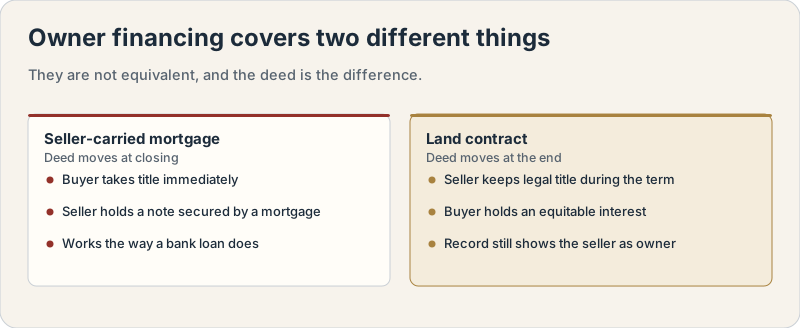
That difference decides almost everything about the risk. In the first arrangement the buyer owns the property and owes money. In the second the buyer has an equitable interest and the record still shows somebody else as owner, often for a very long time.
What the Buyer Should Search Before Signing
The buyer in an owner-financed deal is doing without the one party who normally forces a title search, which is an institutional lender. Nobody will require the search, so it has to be ordered deliberately.
Whether the seller actually owns it
The starting question, and it is not always a formality. Property inherited but never probated, held in a dissolved entity, or owned with a co-owner who is not at the table all produce a seller who cannot convey clean title. Where an estate is involved, our guide to inherited property title searches covers what the record shows.
Whether there is an existing mortgage
This is the largest single risk in owner financing. If the seller still owes a bank, the buyer's payments to the seller do nothing to satisfy that loan, and the bank can foreclose on a property the buyer has been paying for. Most mortgages also contain a due-on-sale clause that a land contract can trigger, giving the lender the right to call the balance immediately.
Liens and judgments against the seller
Because the seller keeps title under a land contract, new judgments and liens recorded against them during the contract term can attach to the property. A buyer three years into payments can find a creditor of the seller with a recorded claim against the home. A lien and judgment search establishes the position at the start, which is the only fixed reference point the buyer will have.
Property tax status
Tax liens generally outrank everything private and follow the parcel. A seller behind on taxes hands that problem to the buyer regardless of who holds the deed.
What the Seller Should Search
Sellers offering financing are underwriting a loan, usually without the tools a bank has. The property is the collateral, so its record condition is the seller's exposure too, and a chain of title search establishes what the seller is actually able to convey when the last payment arrives. It also surfaces old defects that would have been the seller's to cure at a normal closing and instead surface years later.
Recording Is What Protects the Buyer
An unrecorded land contract is close to worthless as protection. If nothing appears in the county record, the seller remains the apparent owner to everyone searching the property, and a later buyer, lender, or creditor may take priority over the contract holder.
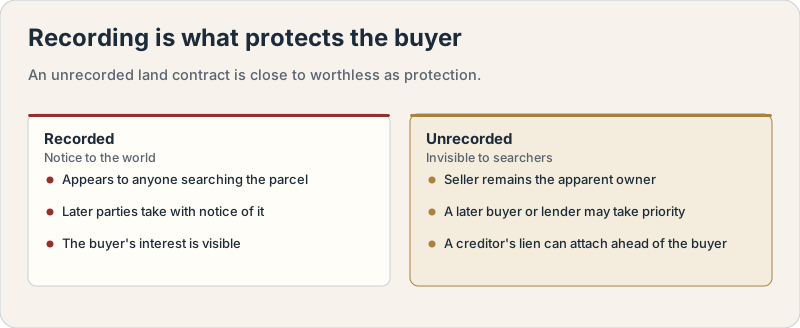
Most states allow the contract itself, or a short memorandum of land contract, to be recorded. Recording puts the world on notice of the buyer's interest without publishing the price and terms. Whether recording is required, permitted, or advisable is a state-law question for an attorney, and the consequences of skipping it are severe enough to be worth asking about.
Check Again During the Term
A buyer under a long land contract is exposed to everything that happens to the seller for the duration. Judgments, tax liens, a new mortgage taken out by the seller, a bankruptcy filing, or the seller's death and an unsettled estate all change the picture, and none of them generate a notice to the buyer.
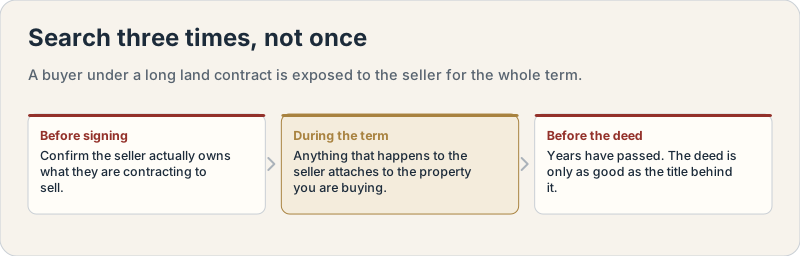
A periodic search, annually or at each major payment milestone, converts that blind period into a monitored one. It also builds a documented record of the property's condition over time, which matters if the arrangement ends in litigation.
At the End of the Term
When the final payment is made and the deed is delivered, the buyer should search again before accepting it. Years have passed, the seller's circumstances have changed, and the deed is only as good as the title behind it on the day it is signed. This is the moment when problems accumulated during the term become permanent, and it is the cheapest moment to find them.
What to Order
For most owner-financed transactions the useful combination is a chain of title deep enough to confirm the seller's ownership, plus the current lien and tax picture. Compare the scopes on the title search products page, or see how a chain of title search differs from a look at the current deed alone. For an unusual structure or several parcels, request a custom quote.
Two honest limits. A title search reports what has been recorded and indexed in the offices searched, as of its date, and recording practice varies by county, so a clean result means nothing was found rather than that nothing exists. And whether a particular contract structure is enforceable, whether it must be recorded, and what remedies a default triggers are questions for an attorney licensed in that state.
Contact us with the address and we will tell you what scope the arrangement calls for.
Order a certified title search today.
Certified abstractors, county-verified records, and clear turnaround times — nationwide.