TitleSearch.com Records
Turnaround Times
The county sets most of the clock. A few things are yours.
On this page
Why There Is No Single Answer
People reasonably want a number, and the honest response is that turnaround depends more on where the property sits than on anything the searcher does. Two searches ordered the same morning, on the same product, can come back days apart because one county has scanned indexes back to the 1970s and the other keeps its older volumes on a shelf.
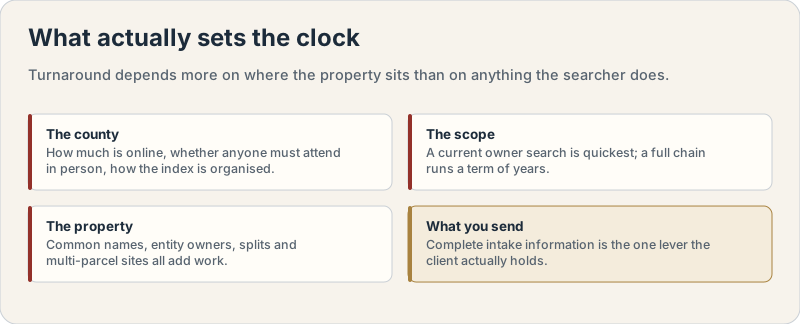
That variation is not a service problem. It is the actual shape of the American land record, which is kept by a few thousand independent county offices operating under different state laws and different accumulated habits.
What the County Decides
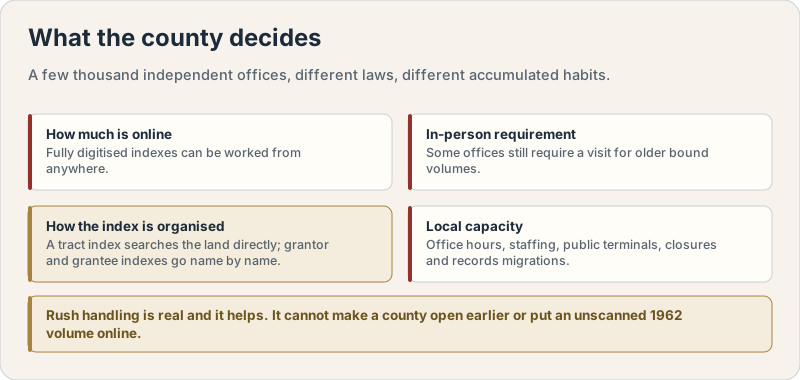
- How much is online. Fully digitized indexes with document images can be worked from anywhere. Recent years online with everything older in bound volumes means any search reaching further back crosses that boundary partway through.
- Whether someone has to attend in person. Some offices still require a physical visit for older records, which introduces travel and office hours into the timeline.
- How the index is organized. A tract index lets the land be searched directly. Where only grantor and grantee indexes exist, the same question has to be answered name by name, back through the chain.
- Local capacity. Office hours, staffing, public terminal availability, and occasionally a closure or a records migration.
None of that is visible from the outside, which is why a firm search estimate is something we give once we know the county rather than in advance.
What the Search Scope Decides
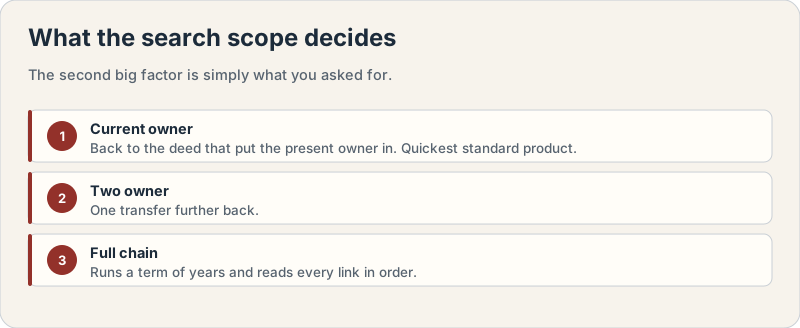
The second big factor is what you asked for. A current owner search reaches back to the deed that put the present owner in and is the quickest of the standard products. A two owner search goes one transfer further. A full chain search runs back to a root of title and takes correspondingly longer, because there is simply more to read.
Copies add time too. A report listing what was found is faster to produce than one attaching the open documents, and on most files the copies are worth the wait. Our basic and expanded comparison sets out what each includes.
What the Property Itself Decides
Some properties are inherently more work regardless of county or scope.
- Common names. A search on a very common surname produces many false matches, and eliminating them takes real time.
- Entity owners. Prior names, mergers, and conversions all have to be run, which multiplies the name searches required.
- Split parcels. Land crossing a county line is two searches, and the slower county sets the delivery date.
- Long or damaged chains. Older rural parcels with metes and bounds descriptions, or counties where fire or flood destroyed volumes, take longer to work through.
What You Can Actually Control
Three things, and they matter more than people expect.
Send complete information at intake. The address and county, the parcel number if you have it, the legal description from the last recorded deed, and every owner name including former, maiden, and prior entity names. An order missing the legal description frequently starts with us establishing which land you mean.
Say what you are trying to establish. A scope matched to the question is faster than a scope chosen by guesswork, because it avoids a re-scope after the work has begun.
Order early. This is the largest single lever and the one most often skipped. Ordering when a transaction opens rather than as it closes turns any finding into something with time to fix, which is the argument in our guide to refinance title searches.
Rush Work and What It Can and Cannot Do
Where a deadline is genuinely tight, tell us the date that binds. Prioritizing a file is real and it helps. What it cannot do is make a county open earlier, put an unscanned 1962 volume online, or shorten a search whose scope requires reading forty years of instruments. Speed comes from sequencing and attention, not from skipping records, and a search that skipped records would not be worth having.
Ordering
See the full range on the Title Search Products page, or sample output on our report samples page. For a large or unusual property, a custom quote is the sensible route, and organizations ordering regularly should look at corporate client services.
When the scope is clear, order a search. If you have a date that cannot move, contact us with the address, the county, and the deadline, and we will tell you what is realistic before anything is ordered.
Order a certified title search today.
Certified abstractors, county-verified records, and clear turnaround times — nationwide.