TitleSearch.com Records
Bank Branch Searches
On this page
Branch Real Estate Changes Hands More Than People Expect
Bank branches move constantly. Institutions merge, networks consolidate, and a building that opened as one bank reopens as another and then as a coffee shop. Every one of those transitions leaves instruments in the county record, and several of them leave restrictions that outlive the institution that wrote them.
That is the first thing to know about searching a branch. The ownership question is usually simple. The restriction question frequently is not.
The Restriction That Catches Buyers
When a bank sells a branch it no longer wants, it often does not want a competitor operating there either. The usual mechanism is a restrictive covenant recorded in the deed, barring use of the property for banking, lending or deposit taking for a stated period.
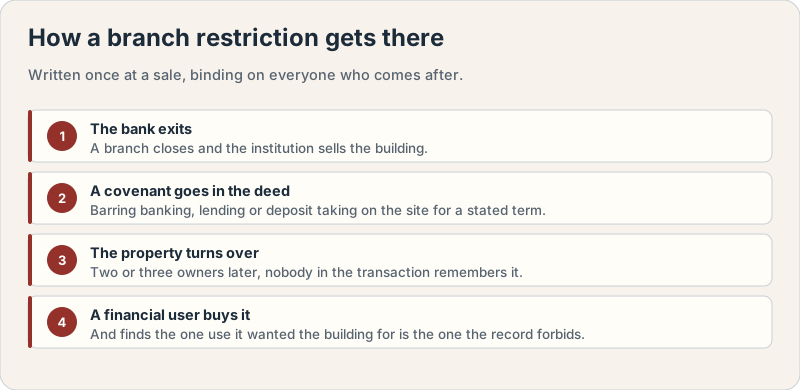
Those covenants run for years and sometimes for decades, and they bind successors. A credit union buying a former branch building precisely because it already looks like a bank can discover that the one use it was bought for is the one use prohibited.
The covenant will be in the chain, and it will not be in the listing. Reading back far enough to find it is the point of the search, which is the same argument made in our note on the chain of title search.
Sale Leasebacks and What the Record Shows
A large share of branch property is held in a sale leaseback. The institution sold the building to an investor and leased it back on a long term, so the tenant on the ground and the owner on the deed are different parties with different interests.
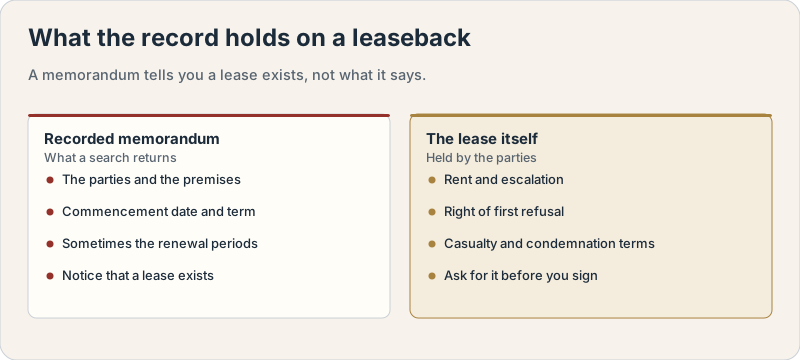
What gets recorded is typically a short memorandum of lease, naming the parties, the premises and the term. The rent, the renewal options, the right of first refusal and the obligations on casualty and condemnation stay in the unrecorded document. A buyer is acquiring the income stream those terms define, and the land record will confirm only that a lease exists.
Where a right of first refusal was separately recorded, it binds a sale, and that is worth finding before a purchase agreement is signed rather than afterwards.
Drive Through Lanes, ATMs and Shared Access
Branch sites are unusually dependent on recorded access rights, because the drive through is frequently not entirely on the parcel.
Stacking lanes that cross a neighboring property, exits onto a shared drive aisle, and ingress limited to a single curb cut are all commonly governed by recorded easements and by a reciprocal easement agreement with the center next door. A remote ATM island or a kiosk in another building usually sits on its own recorded easement or a short ground lease.
These are small documents with large consequences. A drive through that loses its exit easement is a drive through that stops working, and the easement and right of way search covers how those rights are located in the record.
The Vault, and What Conveys With the Building
A vault door, a safe deposit nest, night depository hardware, teller line millwork and the drive through pneumatic system are all installed plant, and some of it was financed as equipment. Where a lender wanted its interest good against a later buyer of the real estate, it will have recorded a fixture filing against the parcel, and that comes back in the search.
On a conversion the same items are a demolition cost rather than an asset, and buyers routinely discover that removing a vault is a structural project.
What to Search, and What Sits Elsewhere
Search the parcel for the chain, the mortgage and the assignment of rents, every easement for access and parking, the recorded lease or memorandum, the fixture filings, and the deed restrictions in the chain. Run the owning entity and the tenant institution by name, because liens attach by name and branch property is commonly held in a single purpose entity.
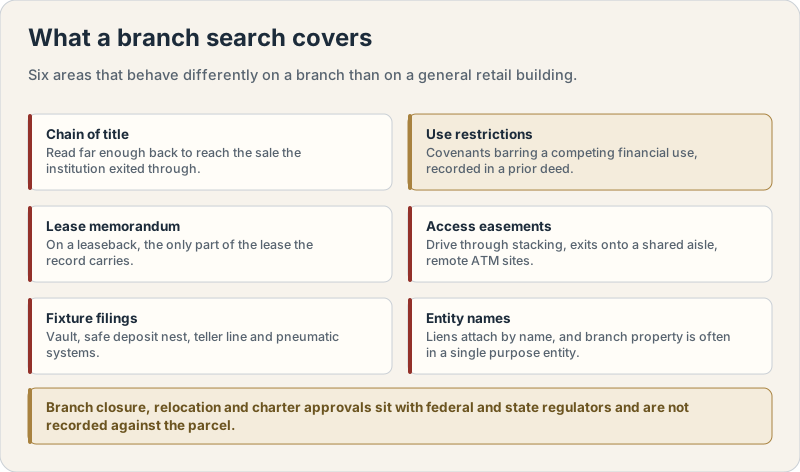
What a search cannot reach is the regulatory layer. Branch closure, relocation and charter approvals sit with federal and state regulators, community reinvestment commitments are agency matters, and none of it is recorded against the parcel.
A search reports what was recorded and found in the indexes reviewed over the term searched. It does not tell you whether a recorded use restriction is still enforceable, what an unrecorded lease permits, or whether a regulator will approve a change. Those belong to counsel and to the agencies. Order a title search naming the parcel and the entities, or tell us what you are buying and we will say which search fits before anything is ordered.
Order a certified title search today.
Certified abstractors, county-verified records, and clear turnaround times — nationwide.