TitleSearch.com Records
Chain of Title Searches
Every owner in order, and the gaps that matter.
On this page
What a Chain of Title Actually Is
A chain of title is the sequence of recorded transfers that carried a property from one owner to the next, read in order. Each link is a deed or other conveyance where the person receiving the property in one instrument is the person granting it in the following one. When that pattern holds all the way through, the chain is unbroken.
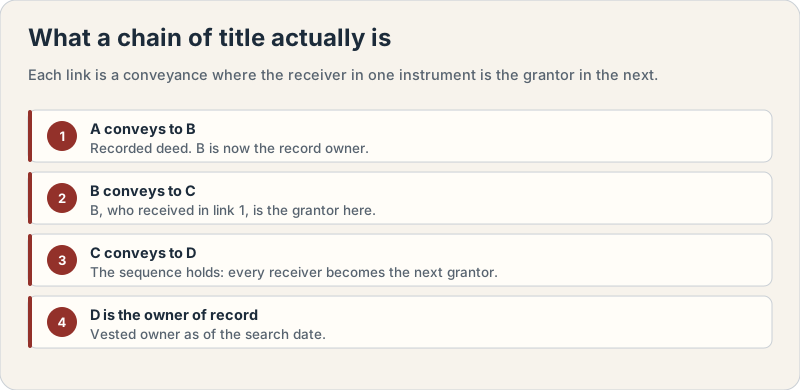
That is the whole idea, and it is more useful than it sounds. Almost everything that goes wrong with title shows up as a break in that pattern, and reading the sequence is how a break gets found.
Why the Sequence Matters More Than the Last Deed
The most recent deed tells you who conveyed the property most recently and to whom. It does not tell you whether that person had good title to convey. A deed is a document, and recording it does not make its contents true.
So a search that reads only the current deed is answering a narrower question than most people think they are asking. If a conveyance three owners back was signed by someone who did not own the whole interest, every deed after it carries the same defect forward, and the current deed looks perfectly ordinary. Reading the chain is what surfaces that.
The same logic applies to burdens on the property. An easement granted in 1958, a restrictive covenant written into a mid century deed, and a mineral reservation carved out when a farm was subdivided all run with the land. Later deeds are usually silent about them, and they remain entirely enforceable. They only appear if the search reaches the instrument that created them.
What Breaks a Chain
A few patterns account for most gaps.
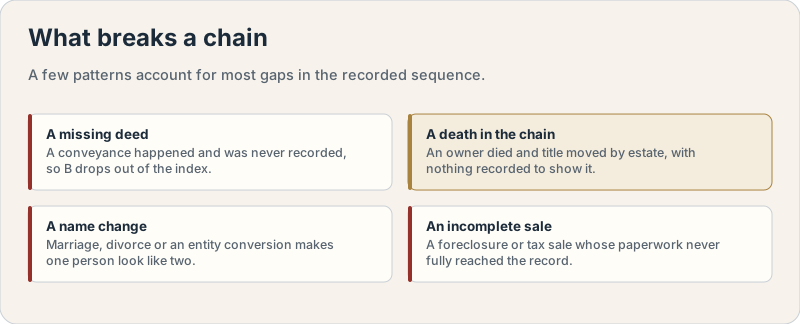
- A missing deed. A conveyance happened and was never recorded, so the index shows the property moving from A to C with nothing explaining how B dropped out.
- A death in the chain. An owner died and title passed by will or by intestacy. Where probate happened in a different county or state, nothing may have been filed where the land sits.
- A name that does not match. A grantor who married, divorced, changed a name, or simply signed with a middle initial one time and not the next. Indexing practice decides whether a variation surfaces or sits invisible a page away.
- An entity change. A corporate owner merged, converted, or was renamed, and the succession was established somewhere other than the county recorder.
- A defective instrument. A deed with an incorrect legal description, a missing signature, or a faulty acknowledgment. It is in the record and it may not do what it appears to do.
Most of these are curable, and most are far cheaper to cure before a transaction than during one. That is the argument for looking early.
What a Gap Means, and What It Does Not
Finding a gap is a finding, not a verdict. It means the recorded sequence does not explain how title moved at that point, and there are several innocent explanations for that, starting with an unrecorded deed sitting in somebody's file.
The reverse also holds. A chain with no visible gaps is good evidence and it is not proof. Recording and indexing practice varies from county to county, coverage runs out at some point in every jurisdiction, and courthouse fires and floods have destroyed whole runs of volumes. An abstractor reports what was found in the indexes read over the term searched, and a report that states its scope plainly is more useful than one that only states a conclusion.
Whether a particular gap is fatal, curable, or immaterial is a legal question. A title search establishes the record; an attorney licensed in that state draws the conclusion from it.
Choosing How Far Back to Go
This is the decision that most changes what the search can return, and it is worth making deliberately rather than by price.
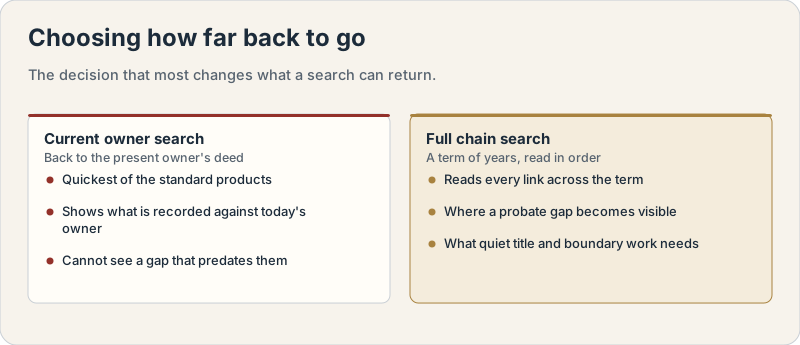
A current owner search reaches back to the deed that put the present owner in, and covers what is recorded against that owner. It is quick and it is blind to anything older. A two owner search goes one transfer further, which catches a useful number of problems the last sale failed to clear. A full chain search runs back to a root of title or a stated year, and it is the only scope that reaches an old severance, a mid century restriction, or an easement granted before the current house existed.
The question you are actually asking should set the term. A refinance is asking about the current owner. A question about whether minerals were ever severed, or whether an old covenant still burdens the lot, cannot be answered by a search that never reaches the instrument in question, and a short search will return nothing rather than returning less. Our basic and expanded search comparison sets out what each scope includes, and the 50 point search describes the most thorough option.
When People Order One
Chain of title work comes up in a predictable set of situations. Quiet title actions and boundary disputes need the full sequence. Inherited property frequently needs it, because the chain is where a probate gap becomes visible, and our guide to inherited property title searches covers that case. Auction and foreclosure buyers use it to understand what they are bidding on, and vacant land buyers use it because raw land carries more unrecorded assumptions than a platted lot. Mineral and oil and gas questions almost always require it, since a severance can be decades old.
Two adjacent guides are worth a look while you are here. A refinance title search answers the narrower question of lien position for a new lender, and a judgment and lien search covers what is owed against a property or a person rather than who has owned it.
You can see sample output on our report samples page, and the full range on the Title Search Products page. When the scope is clear, order a search. If you are not sure how far back you need to go, contact us with the address, the county, and what you are trying to establish, and we will tell you which term fits before anything is ordered.
Order a certified title search today.
Certified abstractors, county-verified records, and clear turnaround times — nationwide.