TitleSearch.com Records
Brewery and Winery Searches
On this page
Production Property Is Three Things at Once
A brewery, a winery or a distillery is a building, a set of heavy installed equipment, and a licensed premises, and those three answer to different records. A buyer who searches the real estate and stops has searched the part that is usually least likely to cause trouble.
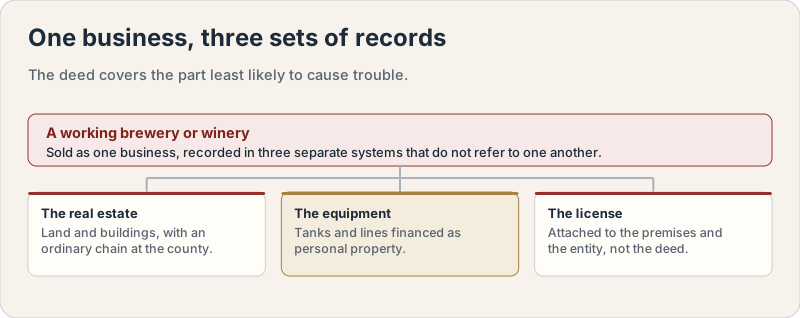
The building and the land behave normally and are searched normally. The equipment is where the money is and where the liens are. The license is attached to the premises and to a person, and no county index holds it.
Equipment Is Personal Property, Until It Is Not
Tanks, a brewhouse, a bottling line and a cold room are financed as equipment, and the lender perfects by filing a financing statement. That filing is usually made at the state level and is searched in a separate system from the land records.
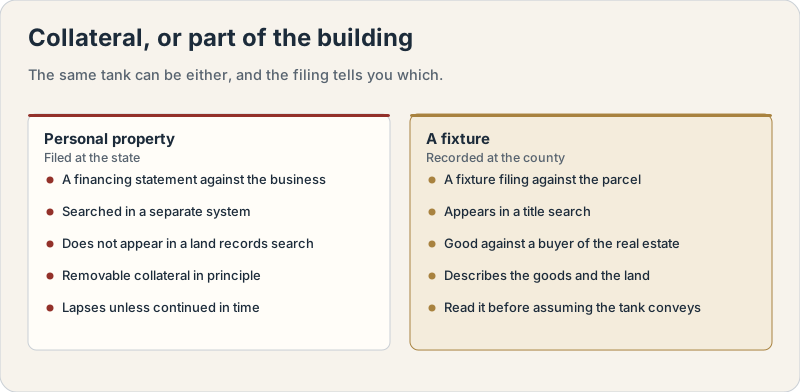
Some of it crosses over. Where equipment is affixed to the building, a lender will record a fixture filing in the county land records so the interest is good against somebody who buys or lends on the real estate. Those appear in a search of the parcel, and our note on UCC fixture filings explains the mechanism.
The practical question for a buyer is which category each item falls into, because a tank bolted to a slab may be a fixture conveyed with the building or collateral belonging to somebody else, and the answer decides what is actually being bought.
Water, Waste and What Travels With the Land
Production uses a great deal of water and produces a great deal of effluent, and neither is a simple matter of connecting to a main.
On a rural winery or distillery the supply may be a well or a surface right with a priority date, and in much of the West that right can be held and sold separately from the land. Our note on water rights and well searches sets out where those sit and what a land records search can reach.
Discharge is the other half. High strength wastewater is frequently handled under an industrial pretreatment agreement with a municipality, or through an on-site system, and either can come with recorded easements, surcharges or capacity limits. A winery adds crush pad runoff and pomace disposal to the list.
The License Is Not in the Land Records
Federal and state licensing attaches to the premises and to the licensed entity. A buyer does not inherit it with the deed, the transfer is its own process with its own timetable, and a bonded premises has to be described and approved.
Local approvals sit alongside it. Conditional use permits, tasting room hours and parking conditions are planning matters, and they are frequently the binding constraint on a business plan. None of it is recorded against the parcel, so none of it will appear in a title search.
What to Search Before You Buy
Search the parcel for the mortgage, the fixture filings and any easement for access, utilities or water. Run the current owner and the operating entity by name, because production businesses commonly separate the real estate company from the operating company and the liens land in different places, as our note on LLC and trust owned property describes.
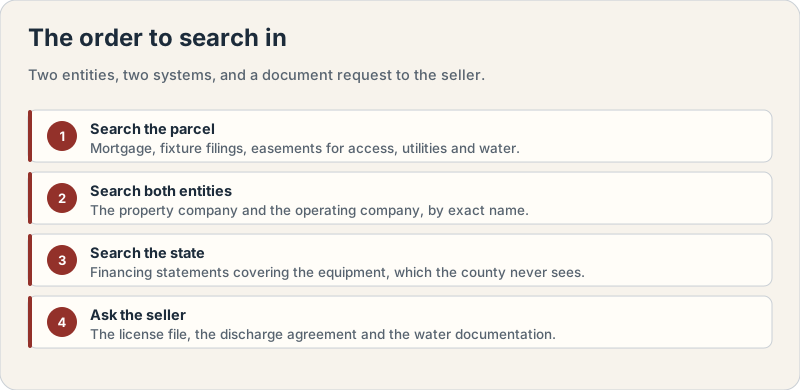
Then run a separate state level search for financing statements covering the equipment, and ask the seller for the license file, the discharge agreement and the water documentation.
What the Record Cannot Settle
A search reports what was recorded and found in the indexes reviewed over the term searched. It does not tell you whether a license will transfer, what a discharge agreement permits, whether a water right is in good standing with the state, or which pieces of equipment are fixtures as a matter of law. Those are questions for counsel and for the agencies that hold the files.
What it does deliver is the recorded half, with copies attached. Order a title search naming the parcel and both entities, or tell us what you are buying and we will say which search fits before anything is ordered.
Order a certified title search today.
Certified abstractors, county-verified records, and clear turnaround times — nationwide.