TitleSearch.com Records
Construction Loan Searches
On this page
Construction Lending Is a Moving Target
A purchase loan looks at a property once, at a fixed moment, and funds against what it finds. A construction loan funds in stages over months while people are on site creating rights against the land the whole time. The title question is therefore not what does the record show today, but what will it show at each draw, and what can appear behind you.
That difference is why construction lending runs the search repeatedly rather than once.
Mechanic's Liens and the Relation Back Problem
A mechanic's lien secures payment for labor or materials supplied to improve a property. Every state has a version, and the details vary enough that the state's statute has to be read rather than assumed.
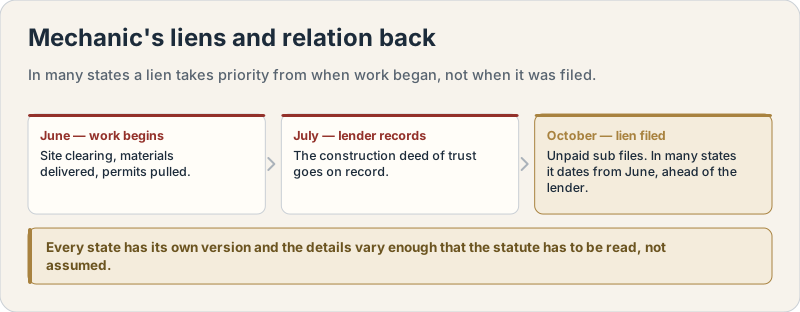
The feature that matters for a construction lender is relation back. In many states a mechanic's lien filed months after work began takes priority as of an earlier date, commonly the date work first commenced or the date the first materials were delivered. A lender whose mortgage was recorded after that date can find itself behind a lien that did not exist when it funded.
The practical consequence is the pre-construction inspection. If visible work has already started before the mortgage is recorded, the lender's position may already be compromised. Confirming that nothing has begun, and documenting it, is a step worth taking seriously rather than as a formality. Our guide to new construction title searches covers the same liens from the buyer's side.
The Searches a Construction Loan Actually Needs
Before closing
The ordinary search, plus a specific look at anything suggesting work has already commenced. Permits pulled, materials delivered, site clearing. The lender wants a clean record and a documented start date.
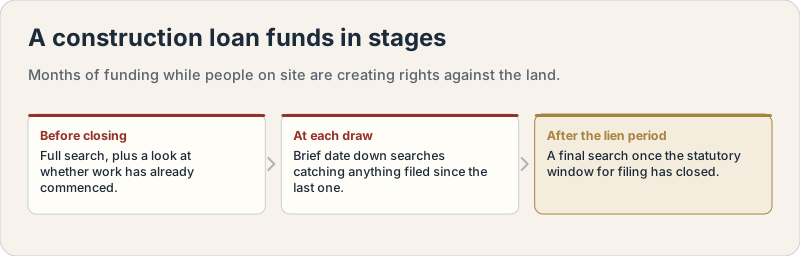
At each draw
A date down search, narrow and quick, confirming that nothing has been recorded since the last one. This is where liens from unpaid subcontractors surface, and finding one before releasing funds is the entire point of the exercise.
At completion
A final search after the statutory lien period has run, because a subcontractor who finished work in March may still have until June or later to file. A property can be complete, occupied, and still exposed.
What the Search Will Not Establish
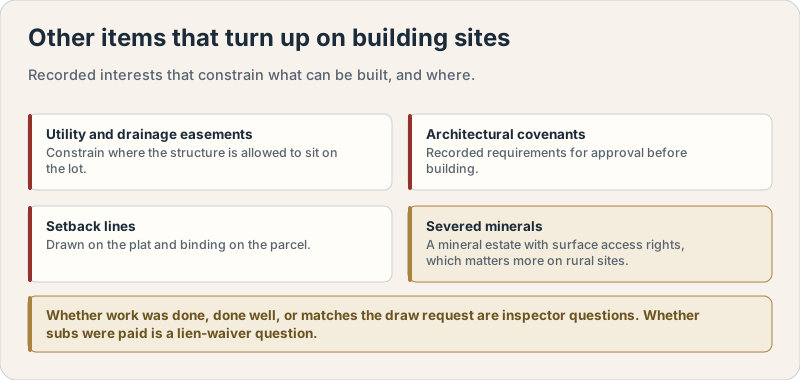
Whether the work was actually done, whether it was done well, and whether the draw request matches the progress on site. Those are questions for an inspector. Whether subcontractors have been paid is a question for lien waivers, which are contract documents rather than recorded instruments and are collected by the lender rather than found by a searcher.
And whether a particular lien has priority over the mortgage is a legal question decided by state statute, not by the order the instruments appear in the index.
Other Items That Turn Up on Building Sites
Utility and drainage easements that constrain where the structure can sit. Recorded covenants imposing architectural approval. Setback lines on the plat. A severed mineral estate with surface access rights, which matters more on rural sites than people expect. Where the land was recently subdivided, an access easement that has to work for construction traffic as well as for the finished building.
On a commercial build, add any recorded lease with a purchase option and any subordination agreement already on file. Compare the scope on our commercial property title search page.
What to Order
For most construction loans the useful combination is a full search before closing, brief date down searches at each draw, and a final search after the lien period closes. Compare the options on the title search products page, see the lien and UCC searches that cover the filings, or request a custom quote for a project spanning several parcels.
Two limits stated plainly. A title search reports what has been recorded and indexed in the offices searched as of its date, and a lien filed yesterday may not be indexed today, which is exactly why the date down happens immediately before funding rather than a week earlier. And recording practice varies from one county to the next.
Contact us with the address and the draw schedule and we will tell you what scope the project calls for.
Order a certified title search today.
Certified abstractors, county-verified records, and clear turnaround times — nationwide.