TitleSearch.com Records
Commercial Property Searches
The same county records, a much wider set of things to look for.
On this page
- Why a Commercial Search Is a Different Job
- The Owner Is an Entity, and That Changes the Name Search
- Recorded Leases and What They Do to Position
- UCC Fixture Filings Sit in the Land Records
- Assessments, Districts and Municipal Claims
- Easements, Access and Shared Structures
- Scoping It Properly Before You Order
Why a Commercial Search Is a Different Job
A residential title search has a fairly predictable shape. One or two people on the deed, a mortgage, maybe a judgment, property taxes, and a set of subdivision restrictions that look like every other lot on the street. A commercial parcel starts from a different place. The owner is usually an entity rather than a person, the property may be generating income under recorded leases, and equipment attached to the building may be financed by somebody who has filed against the land to protect it.
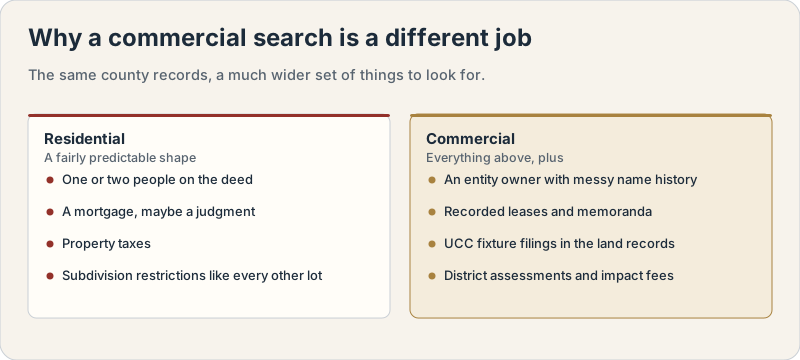
None of that is exotic. It is just a wider set of things to look for, and a search scoped for a house will not find most of it, because it was never looking.
The Owner Is an Entity, and That Changes the Name Search
Most commercial property is held by a limited liability company, a corporation, a partnership, or a trust. The entity is the record owner, so the entity is what has to be searched, and entity names are far messier to search than personal names. They get abbreviated inconsistently on filings, they are frequently very similar to other entities in the same family, and they change.
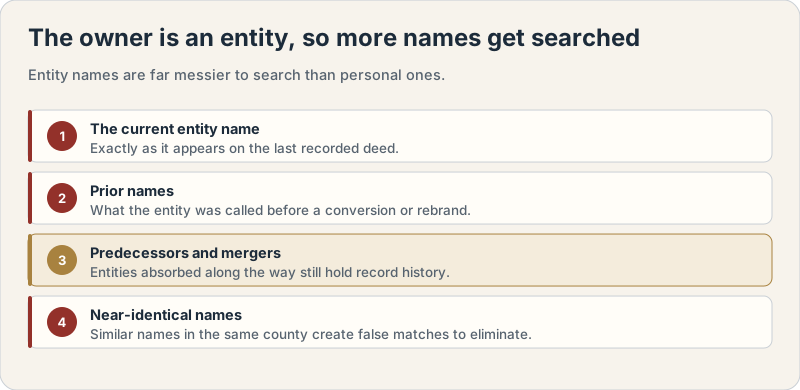
A single property can pass through a name change, a merger, or a conversion from one entity form to another without ever leaving the same beneficial ownership. Each of those events can leave a lien indexed under a name nobody is searching any more. So a proper commercial scope includes prior entity names found in the chain, not only the name on the current deed.
Where a property was acquired through a portfolio transaction, the chain can also run through entities formed purely for the deal, which is normal and simply means there are more names to run.
Recorded Leases and What They Do to Position
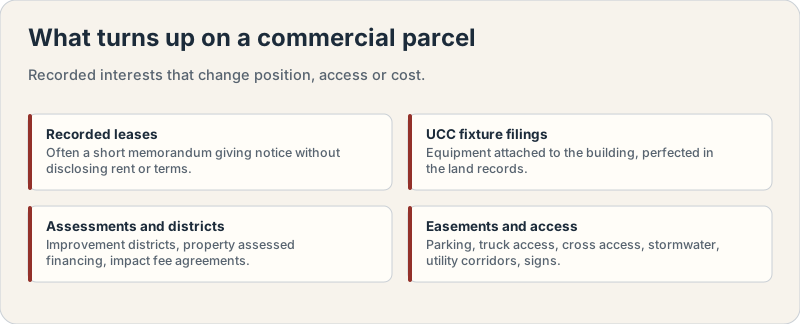
Commercial tenants often record something. It may be a full lease, and more commonly it is a short memorandum giving notice that a lease exists without disclosing the rent or the terms. Either way it is a recorded interest in the property, and its recording date matters, because a lease recorded ahead of a mortgage can outrank it.
Two other recorded instruments travel with leases and deserve attention in their own right. A subordination, non-disturbance and attornment agreement sorts out the relationship between the lender and the tenant, and its presence or absence is a finding. A recorded purchase option or right of first refusal held by a tenant can materially affect what a buyer is actually acquiring.
The lease terms themselves are not in the record. A memorandum is designed to give notice without disclosing them, and getting the underlying document is a transaction step rather than a search step.
UCC Fixture Filings Sit in the Land Records
Most financing statements are filed with a secretary of state and never touch a property record. A fixture filing is the exception. When a lender finances equipment that is attached to the building, it can perfect its interest by recording against the land, and that filing is indexed against the parcel like a mortgage.
On commercial property this comes up constantly. Rooftop solar, HVAC systems, elevators, commercial refrigeration, restaurant hoods, signage, and processing equipment are all commonly financed this way. A fixture filing does not clear itself when the debt is paid, so a buyer can inherit a live filing covering equipment that was paid off years ago. Our guide to solar leases and UCC fixture filings covers how these read and how they get released.
Assessments, Districts and Municipal Claims
Commercial parcels attract obligations that residential lots usually do not. Special assessment districts, business improvement district charges, property assessed financing, and impact fee agreements are all capable of being recorded against the land, and they generally survive a sale.
Code enforcement and municipal claims behave differently from place to place. In some jurisdictions an unpaid utility balance or an uncorrected citation becomes a charge against the parcel; in others it stays a debt of whoever incurred it. Recording and indexing practice varies by county, so this is a question that gets answered locally rather than from a general rule.
Easements, Access and Shared Structures
A commercial site depends on things that are not always inside its own boundaries. Parking, truck access, loading, cross access to a neighboring lot, shared stormwater detention, utility corridors, and sign locations are frequently governed by recorded agreements between separate owners. In multi-tenant developments, a reciprocal easement agreement can be the single most important document affecting the property, and it will not turn up unless the search is looking for it.
Scoping It Properly Before You Order
Two decisions carry most of the weight. The first is which names get searched, and the answer on commercial property is usually more names than the client initially supplies. The second is how far back the search reaches, since old restrictions, reverter clauses in a conveyance from a public agency, and severed mineral estates only appear if the term is long enough to reach them.
Our comparison of the basic and expanded searches sets out what each scope covers, and the expanded search is the usual starting point here because it returns copies of the open documents rather than a list. For a large or unusual property, a custom quote is the sensible route, and organizations ordering regularly should look at our corporate client services.
Two adjacent guides are worth a look. Investors deferring gain should read our guide to a 1031 exchange title search, and anyone working to a date should read what actually sets title search turnaround.
See the full range on the Title Search Products page, or order a search when you know the scope. If you would rather talk the property through first, contact us with the address and the entity name and we will tell you what a search of that scope would and would not cover.
Buying a unit rather than a whole building? Our guide to condominium and HOA title searches covers the declaration and the assessment questions that come with it.
Financing a build rather than a completed building? Our guide to construction loan title searches covers the date down searches a staged funding needs.
Order a certified title search today.
Certified abstractors, county-verified records, and clear turnaround times — nationwide.