TitleSearch.com Records
1031 Exchange Searches
Deadlines that do not move, and a search that has to keep up.
On this page
The Calendar Is the Whole Problem
A like-kind exchange under section 1031 gives an investor a fixed and unforgiving schedule. Replacement property has to be identified within a set window after the relinquished property closes, and the exchange has to be completed within a longer but still fixed window after that. Those clocks do not pause for a title problem.
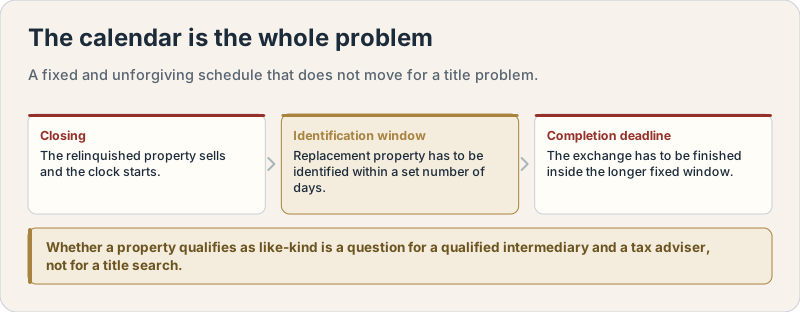
That single fact should drive when the search is ordered, and it usually does not. A defect found with three weeks left is a manageable problem. The same defect found with four days left is a failed exchange and a tax bill.
Two Properties, Two Different Questions
Both sides of an exchange deserve attention, and they need different things from a search.
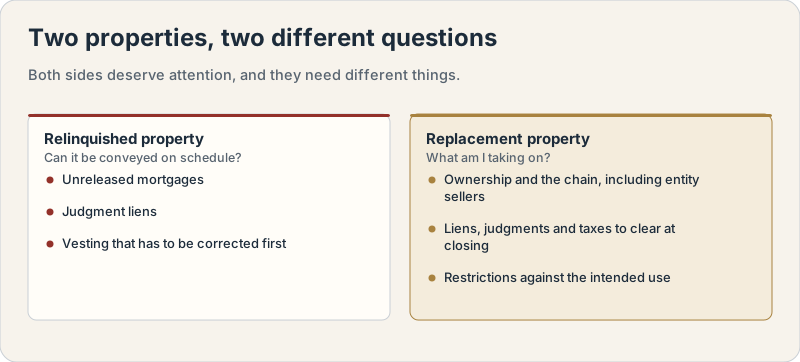
On the relinquished property, the question is whether it can be conveyed cleanly and on schedule. Unreleased mortgages, judgment liens, and vesting that does not match the seller are the usual obstacles, and each takes time to clear that the calendar may not allow.
On the replacement property, the question is what the investor is acquiring and what comes with it. This is where the search earns its fee, because the investor is frequently buying at speed, in an unfamiliar market, under pressure to identify something before the window closes.
What to Check on the Replacement Property
- Ownership and the chain. Who actually holds title, and whether the seller has authority to convey. Entity sellers need their prior names run as well.
- Liens, judgments, and taxes. Anything that has to be paid or released at closing, plus the current tax position and any assessment riding on the tax bill.
- Easements and recorded restrictions. An investor buying for a specific use needs to know whether a recorded covenant forbids it. This is the finding that most often changes the economics after the fact.
- Recorded leases. On income property, a lease recorded ahead of a mortgage carries its own position, and a tenant purchase option can complicate what is being acquired.
- The legal description. Whether it matches what everyone believes is being bought, particularly where a parcel has been split or combined.
Replacement Property Is Where Pressure Meets Unfamiliarity
The identification window pushes investors toward properties they have looked at briefly, often in a market they do not know well. Recording and indexing practice varies from county to county, so an investor who understands their home market perfectly may have no feel at all for what a search in the replacement county will and will not surface.
That is an argument for a scope decision made deliberately rather than by habit. A chain of title search reaches old restrictions and severances that a current owner search cannot, and on unfamiliar ground that reach is worth more than it is at home.
Order Before You Identify, Not After
The instinct is to identify the property first and then start diligence. Reversing that, at least for a preliminary look, is what protects the exchange. Knowing that a candidate carries a recorded restriction against the intended use, or an unreleased mortgage from 2004, is far more useful before it goes on the identification list than after.
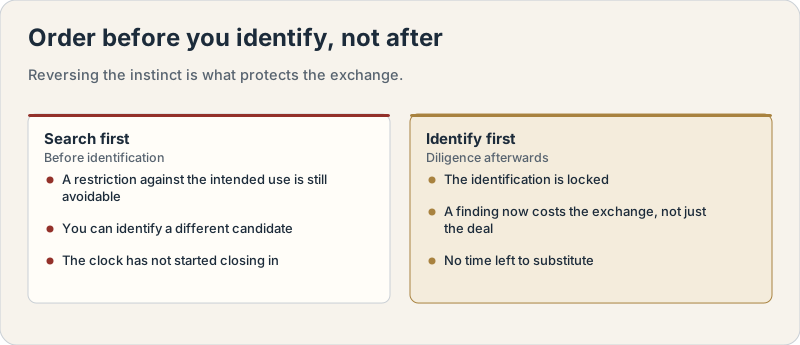
Where several candidates are being considered, searching more than one is cheap relative to the tax exposure of a failed exchange, and it means the identification list is built on the record rather than on the listing.
What the Search Does Not Cover
It is not tax advice and it does not determine whether a property qualifies as like-kind, which is a question for a qualified intermediary and a tax adviser. It is not title insurance, and it is not a survey, so it cannot tell you where a boundary runs or whether a structure encroaches.
An empty result means nothing was found in the indexes read over the term searched, as of the date the work was done. Recording practice is local, so what an index can contain is a local fact, and a report that names its scope is more useful than one that only states a conclusion.
Getting It Done Quickly
Send the address and county, the parcel number if you have one, the legal description from the last recorded deed, and every owner name including entity predecessors. Say that the file is on a 1031 clock and give the date that actually binds, because that changes how the work is sequenced.
See the full range on the Title Search Products page, or the basic and expanded comparison to match the scope to the risk. Investors buying income property should also read our guide to commercial property title searches. When the scope is clear, order a search, or contact us with the deadline and we will tell you what a search of that scope would and would not cover.
Order a certified title search today.
Certified abstractors, county-verified records, and clear turnaround times — nationwide.