TitleSearch.com Records
Movie Theater Searches
On this page
A Theater Is Rarely Just a Building
Most theaters were built as part of something larger. A multiplex anchoring a retail center, a pad at the edge of a mall ring road, a downtown house that grew into the buildings either side of it. That history is what makes the search interesting, because the instruments written when the site was assembled are still binding the land long after the tenant mix has turned over twice.
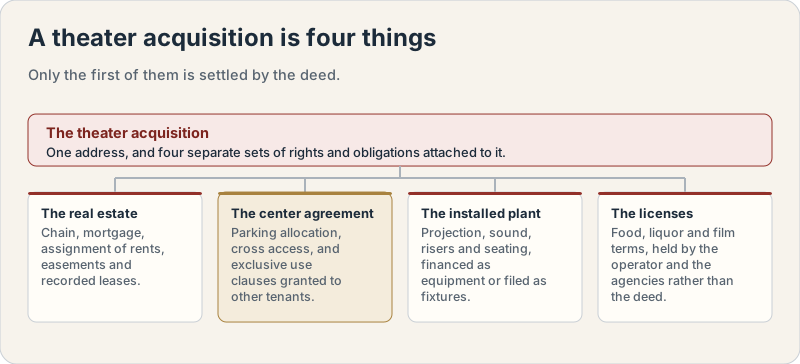
A buyer who searches the parcel and stops has the ownership answer. The questions that decide what can be done with the building sit in documents recorded for somebody else's benefit.
What the Center Wrote Into the Record
Where a theater sits in or beside a shopping center, there is usually a reciprocal easement agreement recorded against every parcel in the development. It is a long document and it does a great deal of work.
It allocates parking, frequently by stall count or by zone, which matters on a property whose demand peaks on Friday evening against a grocery anchor whose demand peaks on Saturday morning. It sets cross access over the drive aisles. It carries maintenance and contribution obligations. And it commonly includes exclusive use clauses granted to other tenants, which restrict what categories of business may operate anywhere in the center.
Those clauses are the ones that reach a conversion plan. A theater being bought for reuse as a fitness club, a church or a climbing gym can find that the use is barred by an instrument recorded in 1994 for the benefit of a tenant who left in 2006. The agreement binds the land, and our note on the commercial property title search covers how those documents read in a chain.
The Installed Plant Is Not the Building
Projection and sound systems, recliner seating, stepped risers, screen frames and the acoustic isolation between houses represent a large share of what a theater cost to build. Most of it was financed as equipment.
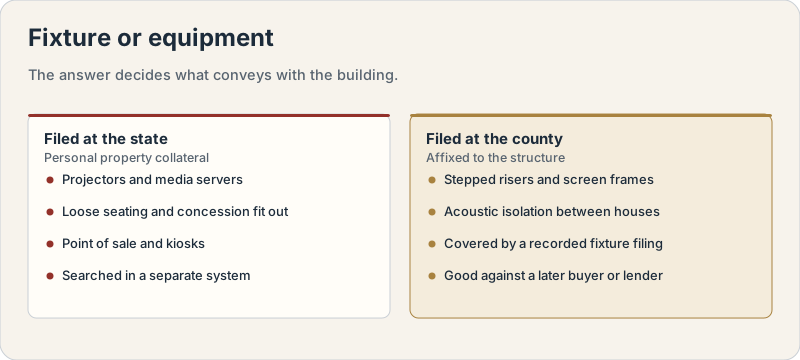
Where a lender wanted its interest good against somebody who later bought or lent on the real estate, it will have recorded a fixture filing in the county land records, and those do come back in a search of the parcel. The mechanism is the same one described in our note on UCC fixture filings.
Equipment financed without a fixture filing is perfected at the state level instead, in a system searched separately from the land records. Which category a given item falls into decides whether it conveys with the building or belongs to somebody else, and that is a question of state law and of how the item was installed rather than one the land record answers.
Licenses, Leases and the Things a Deed Does Not Carry
Food service and liquor licenses are held by the operator and by the agency that issued them. A buyer does not inherit them with a deed, and on a venue with a full bar the license transfer is frequently the longest item in the closing schedule.
Film licensing works differently again. Studio terms, clearance arrangements and any zone protections are commercial agreements between distributor and exhibitor, and no county index holds them.
Where the theater occupies leased space, the land record usually shows only a short memorandum of lease naming the parties, the premises and the term. That tells you a lease exists without telling you what it says, and the landlord's own mortgage, recorded before the lease, generally outranks it.
What to Search Before You Buy
Search the parcel for the chain, the mortgage, the fixture filings and every easement for access, parking and utilities. Then read back to the instrument that created the pad or the outparcel, because that is normally where the access rights and the use restrictions were written.
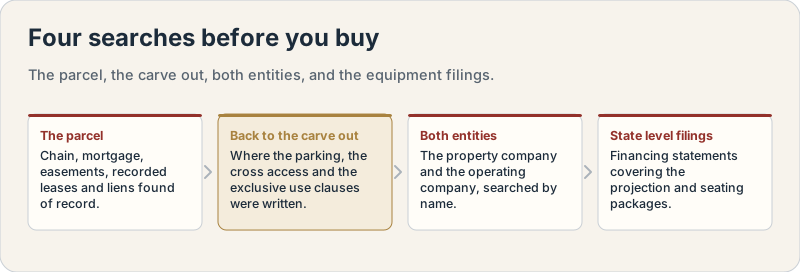
Run both entity names. Theater operations commonly separate the real estate company from the operating company, and judgments and tax liens attach by name, which is the pattern set out in our note on LLC and trust owned property.
What the Record Cannot Settle
A search reports what was recorded and found in the indexes reviewed over the term searched. It does not tell you whether a liquor license will transfer, what an unrecorded lease permits, whether a proposed reuse is allowed under zoning, or which items of installed equipment are fixtures as a matter of law. Those belong to counsel, to the planning office and to the agencies holding the files.
What it does deliver is the recorded half, with copies attached. Order a title search naming the parcel and both entities, or tell us what you are buying and we will say which search fits before anything is ordered.
Order a certified title search today.
Certified abstractors, county-verified records, and clear turnaround times — nationwide.