TitleSearch.com Records
Hangar and Aviation Searches
On this page
You Are Usually Buying a Lease, Not Land
A hangar transaction looks like a real estate purchase and frequently is not one. At most public airports the land belongs to the airport sponsor, which is a city, a county, or an authority, and what changes hands is a ground lease together with ownership of the structure standing on it.
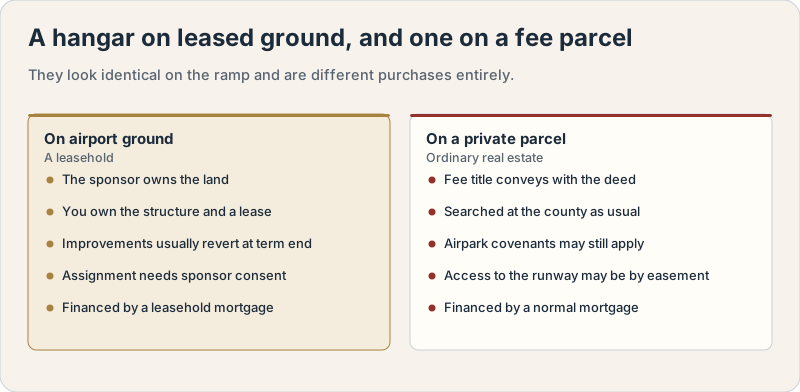
That distinction decides everything that follows. The remaining lease term, not the age of the building, sets the value. A hangar on a lease with nine years left is a depreciating asset with a hard stop, because most of these leases provide that improvements revert to the airport at the end of the term.
The same shape appears in other collateral, and our note on LLC and trust owned property covers a related problem, which is that the named owner on a document is often not the party you assume.
What the County Record Holds
Less than you would expect, and it is worth getting in full anyway.
A ground lease is often recorded only as a memorandum, a short instrument naming the parties and the term without the rent. Leasehold mortgages appear, since a lender financing a hangar takes a security interest in the leasehold rather than in the fee. So do assignments, which matter because hangars change hands repeatedly without the underlying lease ever being rewritten.
Also recorded are the avigation easements over surrounding land, which reserve the right to the airspace and to the noise that comes with it. Those run against the neighbors rather than against the airport, and they appear in a search of adjoining property more often than in a search of the hangar itself.
What Sits With the Airport Instead
The airport sponsor holds the documents that actually govern the property. The lease itself with all amendments, the minimum standards that dictate what commercial activity is allowed, the rules on subleasing and on through-the-fence access, and the current rent schedule with any escalator.
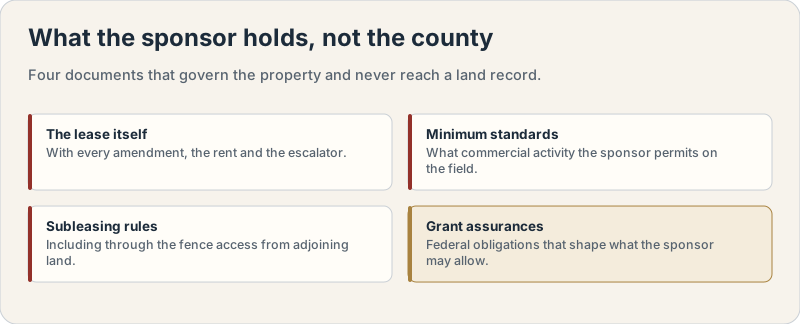
Federal grant assurances sit behind all of it. An airport that has taken federal money agrees to operate on certain terms, and those obligations shape what the sponsor can permit, what rent it must charge, and whether a use is allowed at all. None of that is recorded against a parcel, and no title search will produce it.
What to Search Before You Close
Establish first whether the hangar sits on leased airport ground or on a private parcel, because privately owned airparks and residential airparks do exist and are searched like ordinary real estate. Then search the parcel the airport holds, so you can see the memorandum, the leasehold mortgages, and the assignment chain.
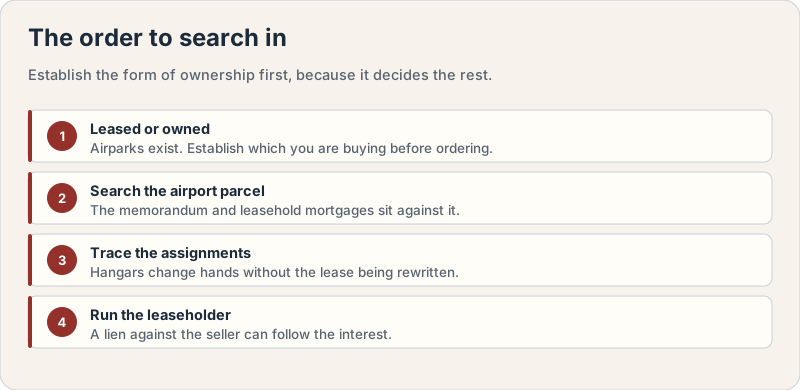
Trace the assignments forward to confirm who holds the leasehold now, and check for a recorded release of any prior leasehold mortgage. A chain of title search is the term that produces that sequence, and a judgment and lien search against the seller is worth running alongside it, since a lien against the current leaseholder can follow the interest.
What the Record Cannot Settle
A search reports what was recorded and found in the indexes reviewed over the term searched. It cannot tell you the rent, the remaining term, whether the sponsor will consent to an assignment, what the minimum standards permit, or what happens to the building at the end of the lease. Every one of those answers comes from the airport, and they are the answers that set the price.
What the search gives you is the recorded half, with copies attached, so you know what is encumbered before you negotiate. Order a title search with the airport name and the parcel, or tell us what you are buying and we will say which search fits before anything is ordered.
Order a certified title search today.
Certified abstractors, county-verified records, and clear turnaround times — nationwide.