TitleSearch.com Records
Church and Nonprofit Searches
On this page
Who Actually Holds the Title
The first question on any church or nonprofit parcel is which entity owns it, and the answer is frequently not the one painted on the sign.
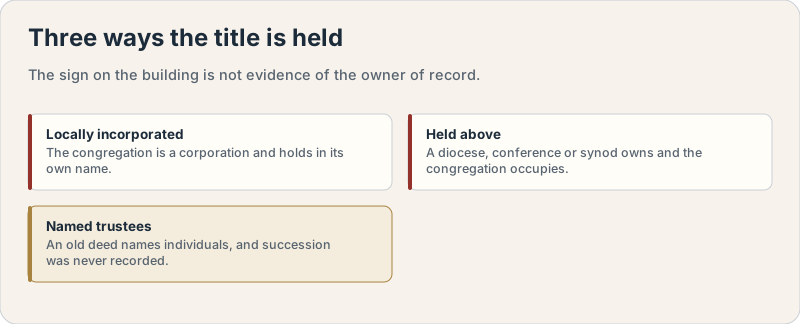
Congregations hold property in several different structures depending on denomination and state law. Some are incorporated in their own name. Some are held by a denominational body, a diocese, a conference or a synod, with the local congregation as occupant rather than owner. Older parcels are sometimes held by trustees named individually in a deed recorded generations ago, all of whom are long dead.
Charities and other nonprofits are usually cleaner, holding as a nonprofit corporation, but the same complication appears where a parcel was donated into a charitable trust or held by an affiliate that has since dissolved.
None of that is unusual and all of it matters, because a deed signed by an entity that does not hold title conveys nothing.
Authority to Convey
The second question follows immediately, which is whether the person signing can bind the owner. On ordinary property this is rarely in doubt. Here it frequently is.
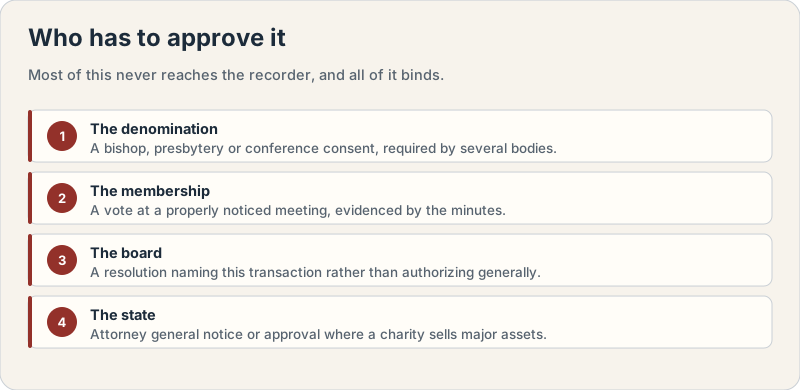
- Denominational approval. Several denominations require a bishop, presbytery or conference to consent before local property is sold or mortgaged, and a sale without it can be challenged.
- Congregational vote. Bylaws often require a membership vote at a properly noticed meeting, with the minutes as the evidence.
- Board resolution. Nonprofit corporations act through their boards, and the resolution should name the transaction rather than authorize generally.
- State attorney general oversight. Some states require notice or approval before a charity disposes of significant assets.
- Trustee succession. Where the deed names individual trustees, a successor instrument is usually needed before anyone can sign.
Only some of this reaches the recorder. Corporate resolutions and denominational consents are occasionally recorded alongside the deed and more often are not, so a search establishes the chain and the parties establish the authority.
Reversions, Restrictions and Exemptions
Land given for a purpose often comes with a condition, and church parcels are among the most likely places to find one still operative.
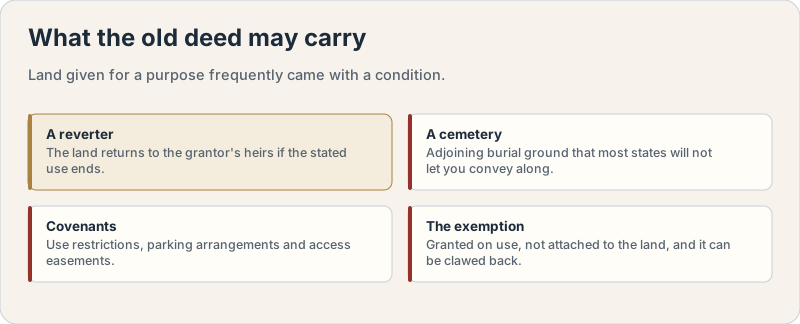
A nineteenth-century deed conveying a lot for use as a place of worship may include a reverter clause returning the land to the grantor's heirs if that use ceases. Whether such a clause is still enforceable depends on state marketable title legislation and on how much time has passed, which is a legal question rather than a records one. It is, however, a question that has to be asked before a congregation sells a building to a developer.
Cemetery parcels adjoining or inside a church lot bring their own rules, and in most states they cannot simply be conveyed with the rest of the ground. Restrictive covenants limiting use, parking arrangements with neighbors, and easements for access are all common.
Property tax exemption is a separate track entirely. An exemption is granted by the assessor based on ownership and use, it does not run with the land, and a sale to a non-exempt buyer generally ends it. Several states also impose a rollback, recovering exempted taxes for prior years, and that liability can attach as a lien. Our judgment and lien search covers the recorded side of that picture.
Ordering the Search
Supply the address and county, the parcel number, and every name the property may have been held under, including the denominational body, any former name of the congregation, and the trustee names if you have an old deed. Multi-parcel campuses should be listed parcel by parcel, since the sanctuary, the parking lot and the parsonage were frequently acquired at different times from different grantors.
A full chain of title search is usually the right term here rather than a current owner search, because the conditions that cause trouble were written into deeds a century ago and a short search will not reach them.
See the full range of searches, or send us the address and the parcel numbers and we will tell you what term the chain calls for before anything is ordered. The same authority and reverter questions arise on a school or daycare property search, with a licensing layer added on top.
Order a certified title search today.
Certified abstractors, county-verified records, and clear turnaround times — nationwide.