TitleSearch.com Records
Mobile Home Parks
On this page
Three Assets in One Transaction
Buying a manufactured housing community looks like buying commercial land with tenants on it. It is closer to buying a small utility with a real estate component and a fleet of vehicles attached, and each of those three pieces is documented somewhere different.
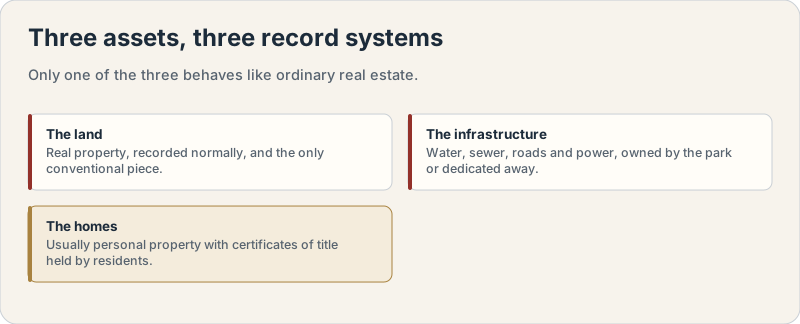
The land is real property and behaves normally. The infrastructure, meaning water lines, sewer, roads and electrical distribution, may be owned by the park, dedicated to a municipality, or sitting in an unresolved state that nobody has tested. The homes are usually titled as personal property, often through a motor vehicle agency, and in most parks most of them belong to the residents rather than to the owner.
What the Land Search Covers
The ordinary work, and it matters more than usual because the parcel is the only piece that behaves conventionally.
Recreational parks work the same way with a different set of models, and our note on campground and RV park searches covers how to tell which one you are buying.
Current vesting and the chain, mortgages and their releases, easements of every kind, and recorded covenants. Liens and judgments against the owner. Tax status, including any special assessments, because parks sit disproportionately in districts that levy for water and sewer improvements.
Two items deserve specific attention. Utility easements running to and through the park, since a private system serving fifty homes depends on a right to cross whatever lies between it and the connection point. And access, because a park served by a private road through adjoining land has a dependency worth confirming rather than assuming.
Where the Homes Actually Sit
Almost never in the county land records, which surprises buyers who expect the search to inventory what is on the property.
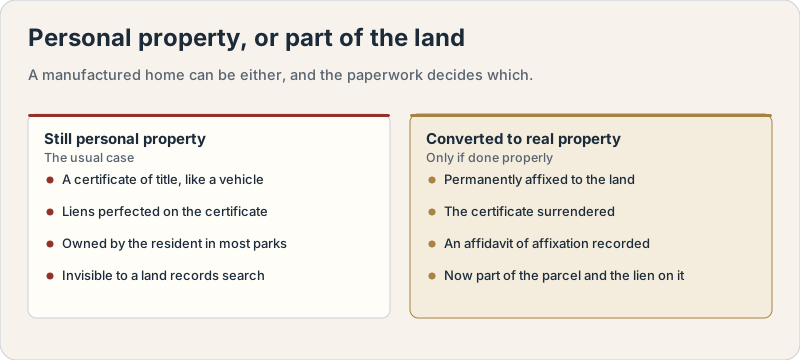
A manufactured home is generally personal property with a certificate of title, held by whoever owns it, and liens against it are perfected on that certificate rather than by recording. Where a home has been permanently affixed and the title surrendered, it converts to real property and becomes part of the land, and whether that was ever done properly is a document question rather than an assumption.
So a park search establishes the land and says nothing about the homes. That distinction runs through our note on the manufactured home title search, and it scales badly. A hundred homes means a hundred separate title situations, and a buyer needs the rent roll and the ownership schedule from the seller because no public index assembles them.
What Else Belongs in the Diligence
Four items sit outside the land record entirely, each with a different body holding it, and three of the four take time to obtain. They belong in week one rather than at the end.
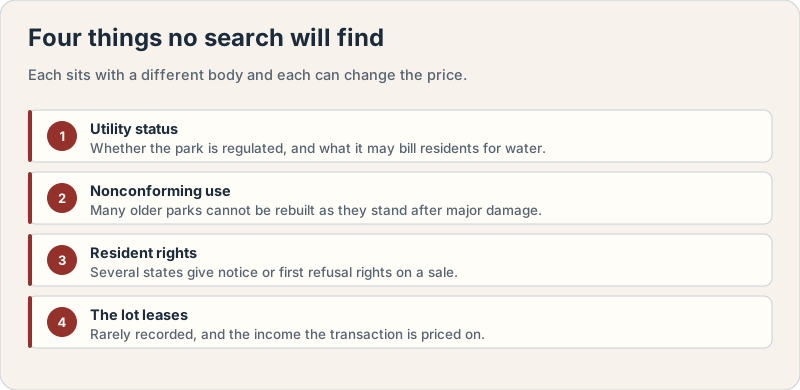
- The utility position. Whether the park is a regulated utility in that state, what it may charge residents for water, and whether any system is under a compliance order.
- Zoning and nonconforming use. Many older parks operate as legal nonconforming uses, which can mean they may not be rebuilt as they stand if they are substantially damaged.
- Resident protections. Several states give residents notice rights, and some a right of first refusal, when a park is offered for sale. Those are statutory rather than recorded.
- Leases and the rent roll. Lot leases are rarely recorded and are the income the transaction is priced on.
- Environmental history. Older parks were frequently built on ground that was something else first.
What to Order
Give us the address or parcel identifiers and the owner name, and tell us how many parcels the park actually sits on, because these are regularly assembled from several and the tax bills are the quickest way to find out. Say whether a private water or sewer system is involved.
A chain of title search on every parcel is the usual scope, with the easements and any recorded utility agreements attached in full rather than summarized. Where the buyer holds several parks, a portfolio search priced as volume work is the sensible route.
A title search reports what was recorded and found in the indexes reviewed, as of the day the work was done. It does not establish who owns the homes, whether the utility system is compliant, or what the leases say. See all search products, or tell us about the property and we will scope it before anything is ordered.
Order a certified title search today.
Certified abstractors, county-verified records, and clear turnaround times — nationwide.