TitleSearch.com Records
Self Storage Searches
On this page
Usually More Than One Parcel
Self storage sites are assembled more often than they are built from scratch, and the assembly shows up in the record rather than on the ground.
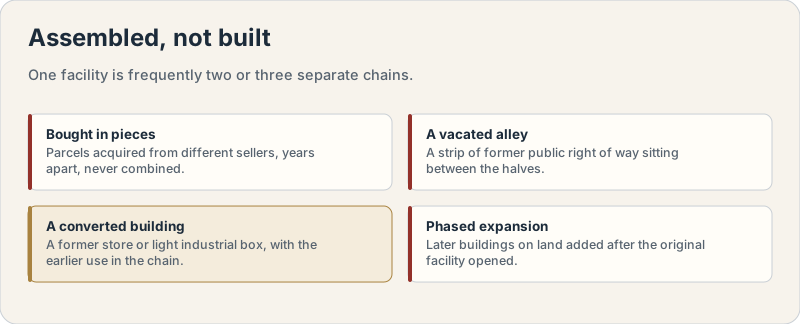
A facility that presents as one property is frequently two or three tax parcels acquired at different times from different sellers, sometimes with a strip of vacated alley in between. Each parcel carries its own chain, its own encumbrances and its own tax bill, and a search ordered on one parcel number covers exactly that parcel.
Conversions are equally common. A closed supermarket, a light industrial building or a former retail box becomes storage, which means the chain runs back through a use that may have left recorded instruments behind. A chain of title search reaching past the conversion is the version of this search that actually helps.
Access, Signage and Visibility
These facilities live or die on visibility from a road, and the rights that provide it are frequently recorded separately from the land.
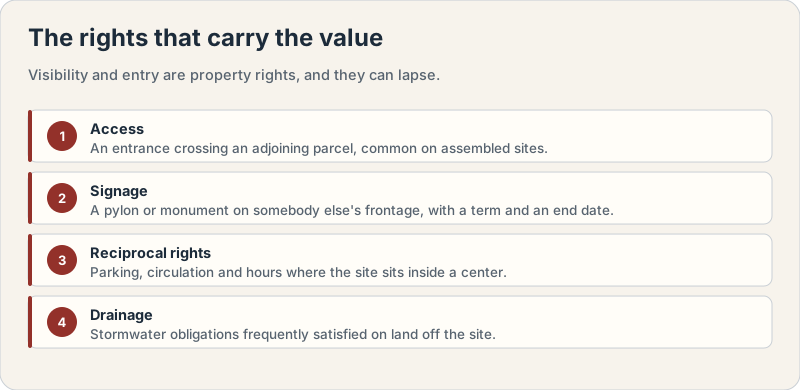
- Access easements where the entrance crosses an adjoining parcel, which is common on assembled sites and on outparcels behind a retail strip.
- Sign easements permitting a pylon or monument sign on somebody else's frontage. These are genuine property rights with genuine value, and they expire.
- Reciprocal easement agreements where the facility sits within a larger center, governing parking, circulation and sometimes hours.
- Drainage and detention easements, since large roof and paving areas generate stormwater obligations that are often satisfied off site.
A facility whose sign rights lapse, or whose entrance depends on a neighbor's goodwill rather than a recorded easement, is worth materially less than the same buildings with those rights secured. The instruments are recordable and the question is whether anybody recorded them.
What the Buyer Is Actually Acquiring
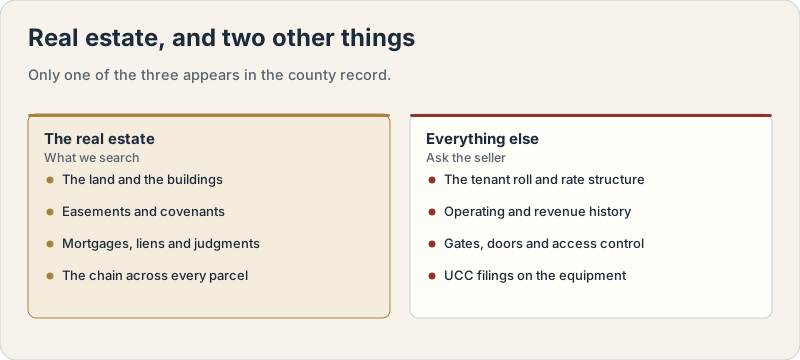
Three things travel together in a sale and only one of them is real estate.
The real property is the land and the buildings, and that is what a title search covers. The business is the tenant roll, the management system, the rate structure and the operating history, none of which touches the county record. The personal property is the doors, the gates, the access control system and the office equipment, which may be subject to UCC filings.
Tenant occupancy agreements are almost never recorded and are usually terminable on short notice, which is unlike most commercial leasing. That cuts both ways. A buyer is not bound to a long tenancy, and the income is correspondingly less secure than a leased building would be.
Liens That Turn Up on These Sites
Alongside the ordinary mortgages and judgments, three appear often enough to look for specifically.
Mechanics liens from a conversion or expansion. Storage facilities are expanded in phases, and each phase generates contractor exposure that can be filed months after the work finishes.
Special assessments and impact fees. Frequently imposed when a site was developed or a use changed, and payable over many years.
Environmental instruments where the site was previously industrial. A recorded use limitation restricting excavation is a real constraint on a facility that may want to expand.
Ordering the Search
Give us the address, the county, every parcel number in the site, the exact name of the ownership entity with any former names, and the adjoining parcels if access or signage crosses them. Tell us what the buildings were before, if they were something else.
A full chain search on each parcel with a judgment and lien search against the entity is the usual scope. For a buyer acquiring several facilities, a portfolio search is the sensible route.
A title search reports what was recorded and found in the indexes reviewed, as of the day the work was done. It does not report occupancy, revenue, or whether a sign permit remains current. See all search products, or send us the parcel list and we will scope it before anything is ordered.
Order a certified title search today.
Certified abstractors, county-verified records, and clear turnaround times — nationwide.