TitleSearch.com Records
Multifamily Searches
On this page
More Than One Parcel, Usually
The first thing to establish on any multifamily property is how many parcels it actually is, because the answer is frequently not one.
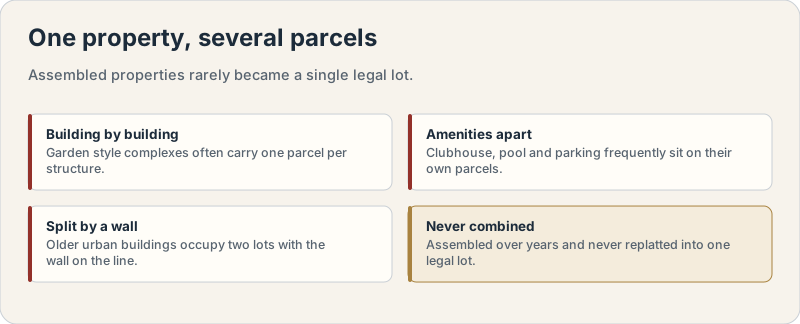
Apartment properties assembled over time sit on several tax parcels that were never legally combined. A garden-style complex may have separate parcels for each building, the clubhouse and the parking. An older urban building may occupy two lots with the party wall on the line. Each parcel carries its own chain, its own liens and its own tax bill, and a search ordered on one parcel number covers exactly that parcel.
Where the property was assembled, the assembly itself is worth reading. Lot line adjustments, replats and vacations of alleys or streets all appear in the record, and a lot line adjustment search is often the right companion to the main work.
The Financing Layer
Commercial multifamily debt leaves a wider trail in the record than a residential mortgage does, and most of it matters to a buyer.
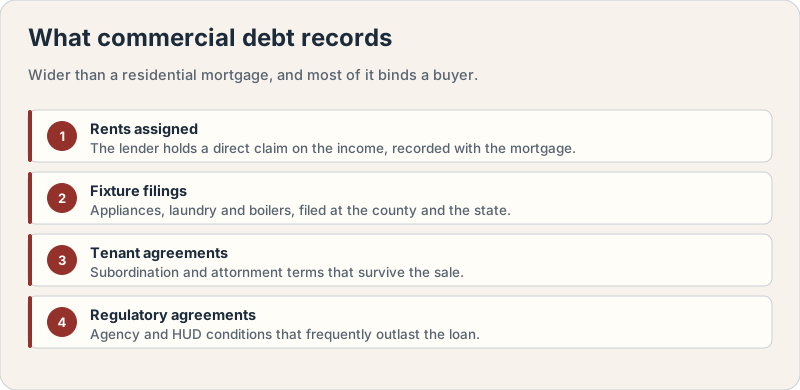
- Assignment of leases and rents, recorded alongside the mortgage, giving the lender a direct claim on the income stream.
- UCC financing statements covering appliances, laundry equipment, boilers and other personalty, filed both at the county as fixture filings and with the state.
- Subordination, non-disturbance and attornment agreements with significant tenants, which bind a purchaser to terms negotiated by somebody else.
- Regulatory agreements from agency, HUD or state housing finance debt, which frequently outlast the loan itself.
- Mezzanine and preferred equity structures, which may appear only indirectly through the ownership entity rather than against the land.
A judgment and lien search against the ownership entity and its variants belongs with the parcel search here, not as an afterthought. Entity-held property is the norm rather than the exception, and the search technique is set out in LLC and trust owned property searches.
Restrictions That Control the Income
Several kinds of recorded restriction determine what the building may charge and who may live in it, and each one changes the value directly.
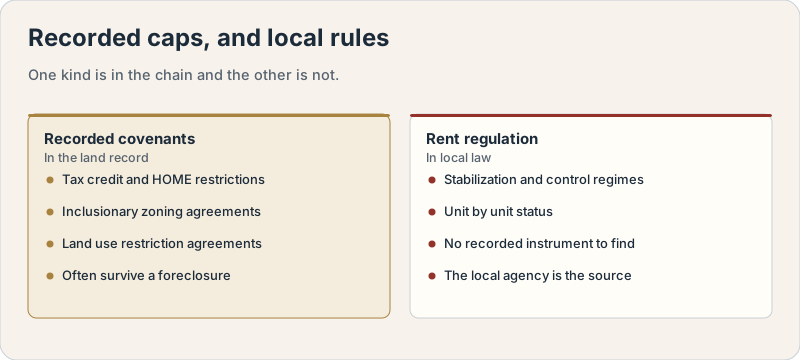
Affordability covenants from low income housing tax credit deals, HOME funds or inclusionary zoning run for decades and are recorded against the land. They cap rents, restrict tenant income, and in many cases survive a foreclosure. A building acquired without reading the covenant is a building whose pro forma is wrong.
Land use restriction agreements attached to agency financing operate the same way and carry their own compliance and reporting obligations.
Rent regulation is a different animal, because in most regulated jurisdictions it is a creature of local law rather than a recorded instrument. The record will not tell you whether a unit is stabilized. The local agency will.
What the Record Will Not Show
On a multifamily property this list is longer than the recorded one, and it is where most of the diligence effort belongs.
Leases are almost never recorded. A tenant in possession holds rights under the lease and under state landlord law regardless of what the county shows, and in most states possession itself puts a buyer on inquiry notice. The rent roll, the leases and estoppel certificates come from the seller.
Certificates of occupancy, open building permits, housing code violations and inspection history sit with the municipality. On older buildings the gap between the legal unit count and the actual unit count is a real and recurring problem, and it is a permit question rather than a title one.
Amounts owed are similarly outside the record. A recorded tax lien tells you a lien exists; the treasurer tells you the balance.
Ordering the Search
Give us every parcel number in the property, the address, the county, the exact name of the ownership entity with any former names, and the approximate acquisition date if you have it. Tell us whether the property carries agency or subsidized financing, because that changes what we look for.
A full chain of title search on each parcel, with judgment, lien and UCC searches against the entity, is the usual scope. Where a buyer is acquiring several properties at once, a portfolio search priced as volume work is the sensible route.
A title search reports what was recorded and found in the indexes reviewed, as of the day the work was done. It does not report tenancies, rent regulation status, code compliance or amounts currently owed. See all search products, or send us the parcel list and we will scope it before anything is ordered.
Order a certified title search today.
Certified abstractors, county-verified records, and clear turnaround times — nationwide.